Loading
Episode
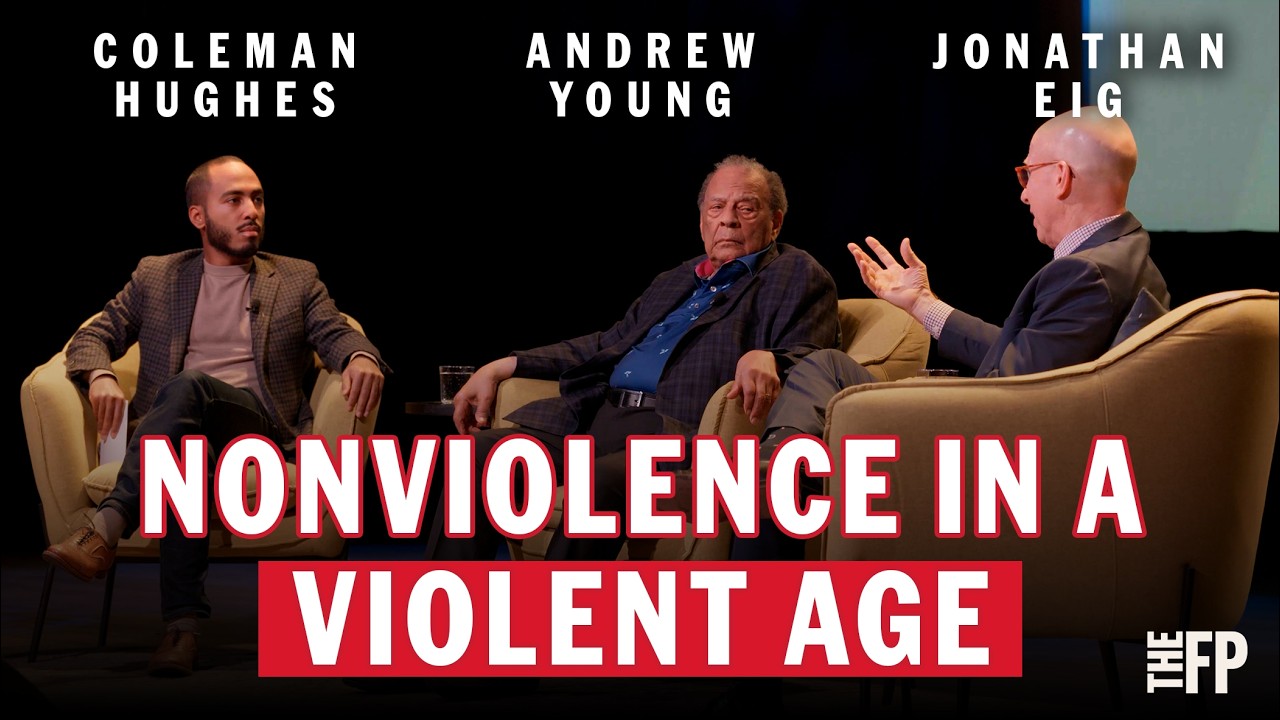
Civil Rights Legend Has a Message for Today's Activists

Views
14K
0.2× the show’s average
Episode14K
Show avg68K
Published
7mo ago
Mar 24, 2026
Length
1h 08m
show avg 1h 15m
From the show
Description
During the height of the Black Lives Matter movement in 2020 and the wave of campus protests since, I have been struck by how far modern activism seems to have drifted from the strategies and philosophies of the civil rights era–which, in my opinion, should have remained the model. In the 1950s and ’60s, political change was pursued with discipline, preparation, and moral clarity. It was a strategy that produced what is arguably one of the most successful movements for social change in history. To explore what changed, and why, I hosted a live event at the Buckhead Theatre in Atlanta with two people uniquely positioned to reflect on that question. Ambassador Andrew Young, now 94, was a central figure in the civil rights movement, a close aide to Dr. Martin Luther King Jr., a former congressman, and a former United Nations ambassador. He spoke about the months and months of rigorous training, planning, and restraint that underpinned the successful nonviolent campaigns he helped lead. Jonathan Eig, author of King: A Life, the Pulitzer Prize-winning biography of Dr. King, added context of King’s evolution, his personal struggles, and his enduring commitment to moral persuasion over destruction. Together, before an audience that included Dr. King’s nephew, Isaac Newton Farris Jr., we wrestled with a set of difficult questions: Can nonviolence still succeed in a polarized, digital age? Does modern activism lack the structure and seriousness of earlier movements? And what has been lost as faith and shared moral frameworks have eroded?
Mentioned
Names dropped
Related
More with these guests
The Breakfast Club BEST OF (Andrew Young & John Hope Bryant & Abby Phillip interview)
13K viewsThe Breakfast Club·Jan 19, 2026· With Andrew Young

The Breakfast Club FULL SHOW 10-23-25
26K viewsThe Breakfast Club·Oct 23, 2025·With Andrew Young

Andrew Young & John Hope Bryant Talk 'The Dirty Work' Documentary, Friendship With MLK Jr. + More
57K viewsThe Breakfast Club·Oct 23, 2025·With Andrew Young
Related
Talks about similar things
“Coverup WORSE!” - New JFK Files are Missing More than You Thought | Stu Wexler • 422
97K viewsJulian Dorey·May 15, 2026

CAPITALISM FOR ALL W/ JOHN HOPE BRYANT, DC YOUNG FLY, & KARLOUS MILLER
108K viewsThe 85 South Comedy Show·Jun 19, 2026

How Do You Talk a Klansman out of the Klan? Ask Daryl Davis.
36K viewsColeman Hughes·Sep 14, 2026

LIVE: OBAMA’S URGENT MESSAGE…
1.3M viewsMeidasTouch·Sep 20, 2026

Doris Kearns Goodwin says America’s history ‘can give us hope’ in uncertain times: Full interview
11K viewsNBC News·Jul 5, 2026
The Breakfast Club BEST OF (Andrew Young & John Hope Bryant & Abby Phillip interview)
13K viewsThe Breakfast Club·Jan 19, 2026