Loading

Episode
Nuclear Arms Race in Full Swing /Lt Col Daniel Davis & Scott Horton
Views
58K
0.8× the show’s average
Episode58K
Show avg76K
Published
12mo ago
Oct 28, 2025
Length
41m
show avg 49m
From the show
Description
Daniel Davis Deep Dive Merch: Etsy store https://www.etsy.com/shop/DanielDavisDeepDive?ref=seller-platform-mcnav The discussion centers on President Trump’s reaction to Russia’s recent successful test of a nuclear-powered, nuclear-armed cruise missile—reportedly with unlimited range and capable of evading any defense system. Despite Trump’s confident demeanor, there’s significant confusion within the U.S. over its strategic goals and the implications of such Russian advances. Guest Scott Horton, author of Provoked: How Washington Started the New Cold War with Russia and director of the Libertarian Institute, argues that this escalation traces back to U.S. decisions decades earlier—especially the 2001 withdrawal from the Anti-Ballistic Missile (ABM) Treaty under George W. Bush. That move, Horton explains, reignited a new arms race, as the U.S. began deploying missile defense systems in Romania and Poland, which Russia perceived as a direct threat. The ABM Treaty, first signed under Nixon, limited missile defense sites to prevent an arms spiral and maintain the doctrine of mutually assured destruction (MAD). By scrapping it, Bush enabled the U.S. to surround Russia and China with anti-missile systems, eroding strategic stability. Horton notes that this also effectively ended the START II treaty, which would have banned multi-warhead ICBMs (MIRVs), further intensifying nuclear risk. Later, Trump’s withdrawal from the INF Treaty deepened Russian suspicions, as the U.S. could now legally deploy nuclear-armed Tomahawk cruise missiles from launchers in Eastern Europe that were originally described as “defensive.” Russia viewed this as a possible first-strike threat, not a defense against Iran as the U.S. claimed. In short, Horton frames Russia’s new nuclear missile developments—including the nuclear-powered Burevestnik—as a direct consequence of decades of U.S. treaty withdrawals and expansion of missile systems near Russia’s borders. He argues these U.S. actions dismantled the arms-control framework that once kept nuclear tensions stable, pushing the world toward renewed Cold War–style brinkmanship.
Related
More with these guests

"That Man Is GUILTY!" Anthony Fauci SILENCE + Trump Vows Iran Revenge After Netanyahu Meeting
468K viewsPiers Morgan Uncensored·Jul 29, 2026· With Scott Horton
The Terrifying 9/11 Excuse & the Dark Israel Plot Nobody Touched | Scott Horton
57K viewsJulian Dorey Daily·Jul 27, 2026·With Scott Horton

Trump Negotiating on IRAN's TERMS /Scott Horton & Lt Col Daniel Davis
38K viewsDaniel Davis / Deep Dive·Jul 9, 2026·With Scott Horton

Dave Smith | Scott Horton | Part Of The Problem 1416
82K viewsDave Smith·Jul 7, 2026·With Scott Horton

"Total PSYCHOS!" Trump Vows Revenge As Iran Shoots Down Apache Helicopter
310K viewsPiers Morgan Uncensored·Jun 10, 2026·With Scott Horton

“Pentagon Is On Red Alert” Mossad Just Declared as #1 Threat | Scott Horton
294K viewsDanny Jones·Jun 8, 2026·With Scott Horton
Related
Talks about similar things

Scott Ritter: Threat of Nuclear War as the Last Arms Control Treaty Collapsed
70K viewsGlenn Diesen·Feb 4, 2026

Ray McGovern: The Road War - Arms Control Collapsing
70K viewsGlenn Diesen·Jan 17, 2026

Putin & His Weapons /Lt Col Daniel Davis & Scott Horton
40K viewsDaniel Davis / Deep Dive·Nov 5, 2025
John Mearsheimer: New Nuclear Arms Race, Pentagon to Resume Testing
48K viewsDaniel Davis / Deep Dive·Oct 30, 2025

Scott Ritter: How NATO & Russia Came to the Edge of Nuclear War
339K viewsGlenn Diesen·Aug 23, 2026
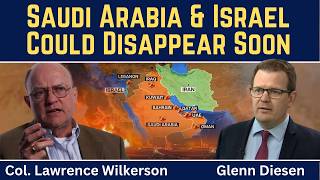
Lawrence Wilkerson: Saudi Arabia & Israel Could Disappear Soon
666K viewsGlenn Diesen·Sep 15, 2026