Loading
Episode
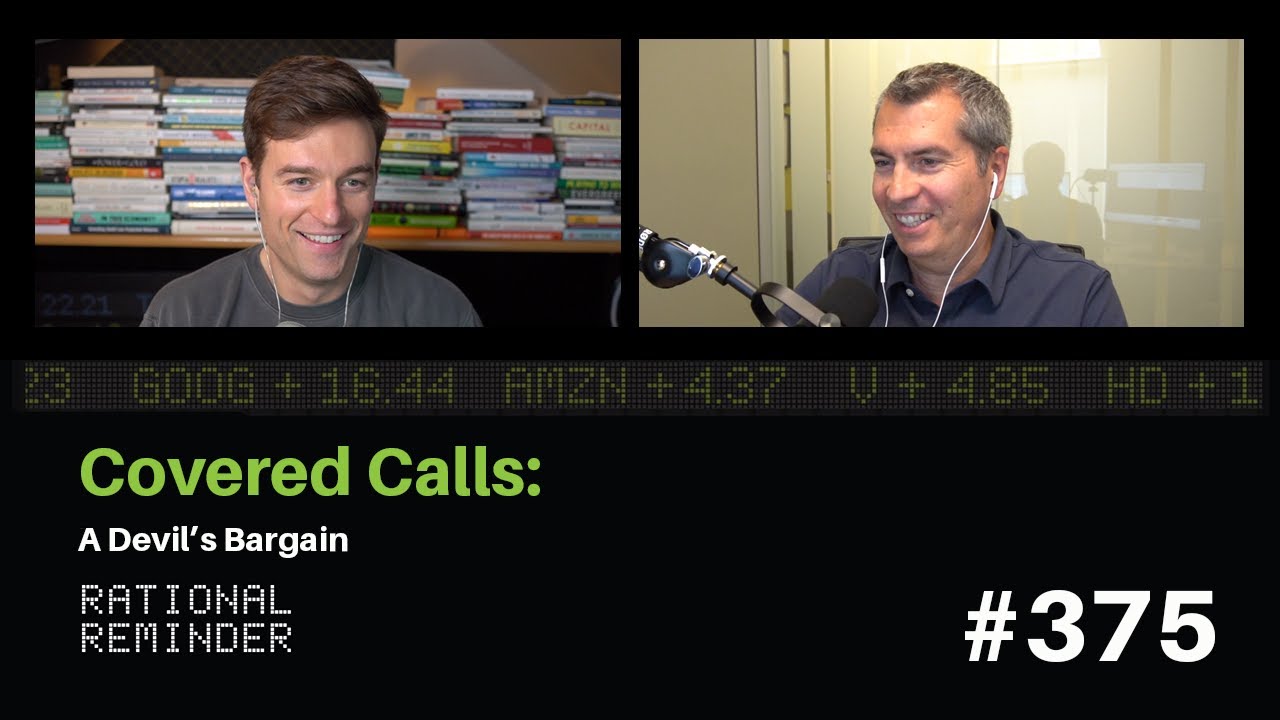
Covered Calls: A Devil's Bargain | Rational Reminder 375
The Rational Reminder PodcastHosted by Ben Felix+3
DB
Views
11K
1.3× the show’s average
Episode11K
Show avg9K
Published
12mo ago
Sep 18, 2025
Length
1h 27m
show avg 1h 11m
From the show
Chapters
Meet with PWL Capital: https://pages.pwlcapital.com/en-ca/contact-us?utm_source=content&utm_medium=youtube&utm_campaign=rationalreminder_yt Avoid Online Scams https://pwlcapital.com/stay-safe-online/ Ben Felix or any PWL employee will never reach out to you on social media platforms or WhatsApp to give financial advice. These are scammers trying to commit fraud. In this episode, Ben and Dan take a deep dive into covered call strategies—popular ETFs often marketed on their eye-catching distribution yields. While these products promise steady “income,” the reality is more complicated. Drawing on recent research from the Journal of Alternative Investments (“A Devil’s Bargain: When Generating Income Undermines Investment Returns”), Ben and Dan unpack why covered calls often reduce expected returns, cap the upside of equities, and leave investors fully exposed to the downside. They explain how covered calls work, why yields are misleadingly presented as “income,” and why long-term investors may find themselves worse off over time compared to simply holding equities or combining equities with cash. The conversation covers live fund performance, behavioral biases that drive demand for yield, and the rise of extreme products like single-stock covered call ETFs with 40%+ “yields.” While covered calls may offer psychological appeal for investors who crave distributions, the evidence shows they often deliver lower total returns, higher costs, and asymmetric risk. If it sounds too good to be true, it probably is—and nowhere is that clearer than in the world of covered call ETFs. *Correction* the comparison at 41:28 is not good. While the names are similar, the BMO Equal Weight Utilities Index ETF (ZUT) and the BMO Covered Call Utilities ETF (ZWU) have different underlying holdings. The language in the ETF Facts for ZWU threw us off: _"Currently, the ETF invests in BMO Equal Weight Utilities Index ETF."_ The BMO Equal Weight Utilities ETF is 92.5% in Canadian stocks and the BMO Covered Call Utilities ETF is only 60% Canadian (with the remainder in the U.S. in both cases). This is obviously a big difference and an oversight in making the comparison, but the BMO Equal Weight Utilities ETF (92.5% Canadian) returned an annualized 7.65% from November 2011 to August 2025 while the Invesco S&P 500 Equal Weight Utilities ETF returned an annualized 10.94% (in USD since ZWU hedges to CAD) over the same period. The U.S. exposure would have helped, not hurt, the BMO Covered Call Utilities ETF relative to ZUT over this period. While not a great comparison, the conclusion grows stronger, not weaker when this correction is made. Links From Today’s Episode: Rational Reminder on iTunes — https://itunes.apple.com/ca/podcast/the-rational-reminder-podcast/id1426530582. Rational Reminder Website — https://rationalreminder.ca/ Rational Reminder on Instagram — https://www.instagram.com/rationalreminder/ Rational Reminder on X — https://x.com/RationalRemind Rational Reminder on TikTok — www.tiktok.com/@rationalreminder Rational Reminder on YouTube — https://www.youtube.com/channel/ Rational Reminder Email — info@rationalreminder.ca Benjamin Felix — https://pwlcapital.com/our-team/ Benjamin on X — https://x.com/benjaminwfelix Benjamin on LinkedIn — https://www.linkedin.com/in/benjaminwfelix/ Dan Bortolotti — https://pwlcapital.com/our-team/ Dan Bortolotti on LinkedIn — https://ca.linkedin.com/in/dan-bortolotti-8a482310
Related
Talks about similar things

The Rise of ETF Slop | Rational Reminder 392
10K viewsThe Rational Reminder Podcast·Jan 15, 2026

AMA 9 – Covered Call ETFs, Currency Hedging, and Bond Misconceptions | Rational Reminder 379
11K viewsThe Rational Reminder Podcast·Oct 16, 2025

Financial Expert: The MOST CONTROVERSIAL Investing Myths That Cost You Money! | Ben Felix
419K viewsThe Iced Coffee Hour·Aug 16, 2026

State of the American Investor | Animal Spirits 427
23K viewsThe Compound·Aug 27, 2025

How would you invest $100k vs. $500k (or more!)? 💰📈 Dividend & Growth Investing
47K viewsInvesting Simplified - Professor G·Dec 20, 2025

How to Become a Super Trader | TCAF 209
139K viewsThe Compound·Sep 19, 2025