Loading
Episode
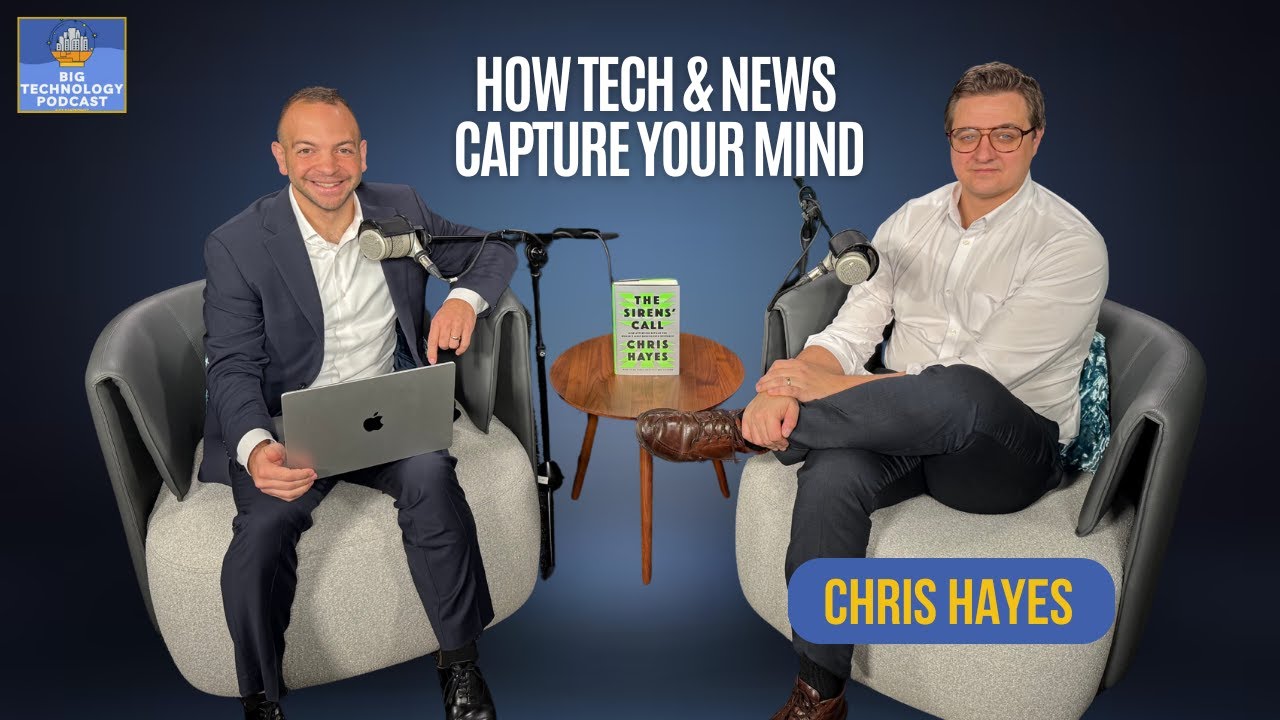
The Formula for Capturing Your Attention, Price of Fame, & Algorithms as Editors — With Chris Hayes
Views
3K
0.2× the show’s average
Episode3K
Show avg17K
Published
19mo ago
Feb 26, 2025
Length
58m
show avg 53m
From the show
Chapters
Chris Hayes is the author of The Siren's Call: How Attention Became The World's Most Endangered Resource and the host of MSNBC's All In With Chris Hayes. He joins Big Technology Podcast to discuss his No. 1 bestselling book, digging into why he wrote it, how news differs from social platforms (and to what degree), and why We also cover the strange psychology of fame, how figures like Trump and Musk weild attention for political power, and why most social platforms are seeing declining user engagement despite their algorithmic optimization. Hit play for a conversation that reveals why our relationship with technology resembles our relationship with food — a biological necessity transformed into an unhealthy craving that reflects deeper voids in modern life.
- 0:00Introduction to Chris Hayes and his bestseller "The Sirens Call"
- 2:37How cable news holds attention through visual techniques and rhetoric
- 5:42The challenge of balancing audience interest with meaningful content
- 8:15The collapse between creators and data metrics in modern media
- 11:03Platforms vs. people: The fundamental difference in attention goals
- 13:50The unprecedented scale and ubiquity of digital attention capture
- 17:17Fame democratized: The psychological impact of stranger attention
- 21:26The decline of original content sharing on social platforms
- 24:19The potential terminal point of algorithmic attention engineering
- 26:35Human agency in the attention economy
- 29:57The tension between compelled attention and willful resistance
- 32:48The food analogy: Attention hunger and unhealthy consumption
Mentioned
Names dropped
Related
More with these guests

Did Progressives Just Find a Way to Beat MAGA? (w/ Chris Hayes)
209K viewsPod Save America·Aug 9, 2026· With Chris Hayes

AI Content and the War for Your Attention
4K viewsa16z·Jul 30, 2025·With Chris Hayes
If They Control Your Attention, They Control You | Emmy-Winning Journalist Chris Hayes
11K viewsDaily Stoic·Jun 8, 2025·With Chris Hayes

Chris Hayes on Trump’s Record, the U.S.-Mexico Border and LGBTQ+ Rights
111K viewsPod Save America·Apr 3, 2024·With Chris Hayes
Related
Talks about similar things

David Pakman Joins The Destiny Broadcast
302K viewsDestiny·Sep 8, 2026
AI Content and the War for Your Attention
4K viewsa16z·Jul 30, 2025

LIVE: Trump’s BIG LIE MACHINE Just GOT EXPOSED... | On Democracy
96K viewsMeidasTouch·Sep 18, 2026

Ryan Holiday - Watch This If You Have a Negative Mind | SRS #321
395K viewsShawn Ryan Show·Jul 13, 2026

Is The Internet Becoming Television? | Cal Newport
10K viewsCal Newport·Dec 8, 2025
If They Control Your Attention, They Control You | Emmy-Winning Journalist Chris Hayes
11K viewsDaily Stoic·Jun 8, 2025