Loading
Episode
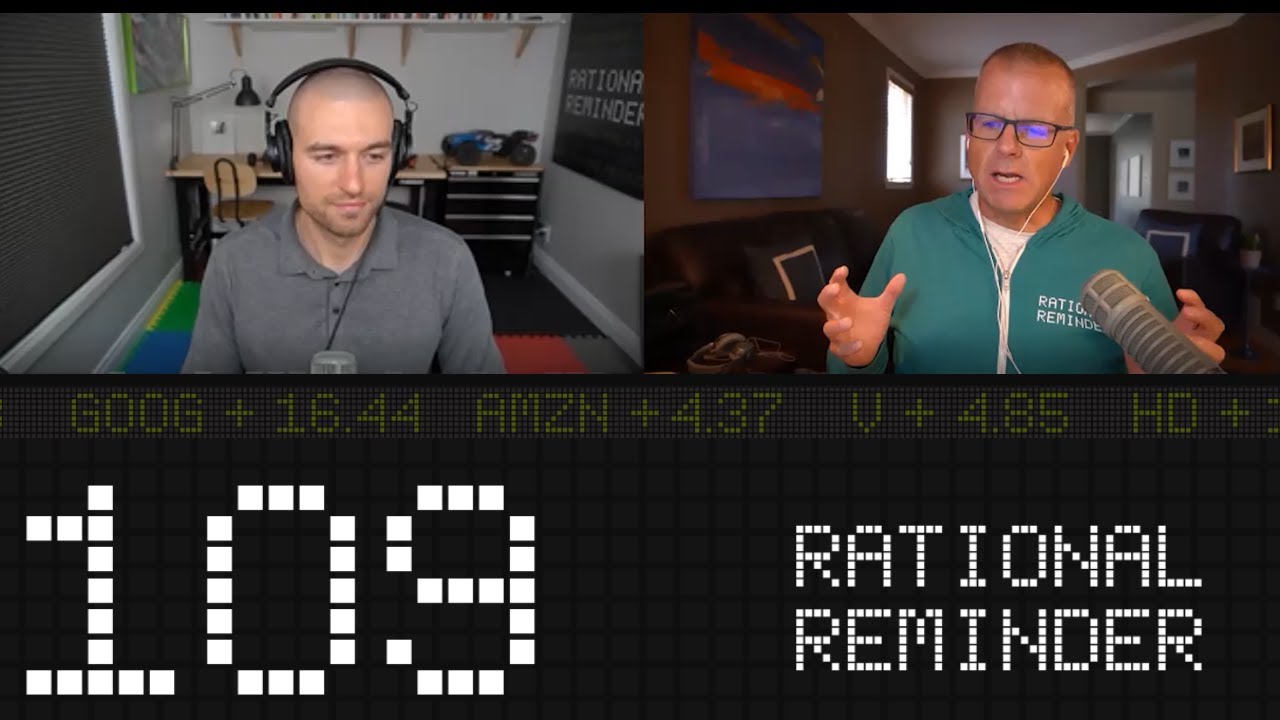
RR #109 - Understanding the Fed's Money Printer, and Lessons from the Crisis
Views
11K
1.2× the show’s average
Episode11K
Show avg9K
Published
6y ago
Jul 30, 2020
Length
1h 14m
show avg 1h 11m
From the show
Chapters
Quantitative easing is a monetary policy whereby a central bank buys government bonds or other financial assets in order to inject money into the economy to expand economic activity. But what exactly does that mean? In today’s episode, Benjamin and Cameron are going to address this topic, avoiding highly politicized aspects, like whether or not central banks should be involved in the economy in the first place, and focusing purely on the operational perspective of quantitative easing – what is it, how it works, and what the intended transmission mechanisms are. Benjamin explains what he has learned through his extensive research, from what money printing and the stock market have to do with one another, where the money for loans comes from, how central banks can influence lending rates, and the difference between regular open market operations and quantitative easing. We also cover how quantitative easing works, the relationship between bank reserves and money in the economy, and what causes inflation, as well as the effect of quantitative easing has on stock prices (if any). We also catch up on recent news stories, and Cameron takes us through five key personal finance lessons we can learn from this crisis. If you’re looking to understand quantitative easing, this episode will hopefully become a useful resource! Tune in today. Key Points From This Episode: Books From Today’s Episode: Pragmatic Capitalism – https://amzn.to/2Ycd3U5 Links From Today’s Episode: Wells Fargo Raises Some Revenue-Sharing Fees for Asset Managers – https://advisorhub.com/wells-fargo-raises-some-revenue-sharing-fees-for-asset-managers/ Five key personal finance lessons we should be learning from this crisis – https://financialpost.com/personal-finance/five-key-personal-finance-lessons-we-should-be-learning-from-crisis Evaluating Asset Market Effects of Unconventional Monetary Policy – https://www.federalreserve.gov/Pubs/IFDP/2014/1101/ifdp1101.pdf Banks Cannot and Do Not “Lend Out” Reserves – https://www.hks.harvard.edu/sites/default/files/centers/mrcbg/programs/senior.fellows/2019-20%20fellows/BanksCannotLendOutReservesAug2013_%20(002).pdf Money Creation in the Modern Economy – https://www.bankofengland.co.uk/quarterly-bulletin/2014/q1/money-creation-in-the-modern-economy Money Reserves and the Transmission of Monetary Policy – https://www.federalreserve.gov/pubs/feds/2010/201041/201041pap.pdf Pragmatic Capitalism – https://www.amazon.com/Pragmatic-Capitalism-Every-Investor-Finance/dp/B01L988EGI Maryland pays more than $320 million in fees to manage pension funds. What does the state get in return? – https://www.washingtonpost.com/local/md-politics/maryland-pays-more-than-320-million-in-fees-to-manage-pension-funds-whats-it-get-in-return/2016/06/12/add4319a-2c39-11e6-9de3-6e6e7a14000c_story.html?tid=a_inl_manual University Endowment Sued for Underperforming the S&P 500 – https://www.institutionalinvestor.com/article/b1ml4nng27k0ln/University-Endowment-Sued-for-Underperforming-the-S-amp-P-500 Rational Reminder Website - https://rationalreminder.ca/podcast/109 The Rational Reminder is presented as an educational resource and should not be construed as individualized investment advice, nor as a recommendation to buy or sell specific securities. The funds and portfolios discussed are examples only and may not be appropriate for your individual circumstances.
- 0:00Intro
- 4:38Book of the week
- 8:22Nasdaq 100 index chart
- 10:02University endowment sued
- 14:42Quantitative Easing (QE), a central bank action
- 17:37Money printing and the stock market
- 25:27The distinction between central banks and private banks
- 33:14The difference between regular open market operations and QE
- 41:11No relationship between reserves and money in the economy
- 43:07What causes inflation?
- 45:14Effect of QE on stock prices
- 50:355 personal finance lessons we can learn from this crisis
Mentioned
Names dropped
Related
Talks about similar things

RR # 101 - Factor Nuances, Dollar Cost Averaging, and Annuities in a Pandemic
11K viewsThe Rational Reminder Podcast·Jun 4, 2020
RR #115 - Actively Managed Funds vs. COVID-19, Behavioral Nudges, and a Sustainable Investing Update
3K viewsThe Rational Reminder Podcast·Sep 10, 2020

RR #106 - Jim Stanford on The Economics of Capitalism in a Crisis
4K viewsThe Rational Reminder Podcast·Jul 9, 2020

Top Learnings from 2022 (plus 23 in 23 Special Guest Shaun Tomson) | Rational Reminder 235
5K viewsThe Rational Reminder Podcast·Jan 12, 2023

RR #117 - A Message from the Bank of Canada, and Safe Withdrawal Rates with Factor Tilts
4K viewsThe Rational Reminder Podcast·Sep 24, 2020

RR #124 - Prof. Lubos Pastor: Equilibrium Models vs. Intuition
5K viewsThe Rational Reminder Podcast·Nov 12, 2020