Loading
Last discussed
4mo ago
May 25, 2026
via Exoplanet Discovery · 1 tagged in 12 months

MUST-SEE: Neil DeGrasse Tyson on Trump, Obama, and aliens
Brian Tyler Cohen·May 25, 2026
All time
13
+13 via 14 narrower
On record
11
took a position
Where they standWhere they stand
Talking pointsNot enough disagreement in the transcripts to form camps. These are the positions taken by people with demonstrated expertise on this topic first, then by how many people heard them on it, then by VoiceRank. Positions are extracted from transcripts by a model and may misattribute who said what. Every quote links to the episode it came from.

The majority of solar systems in the universe look radically different from our own solar system.
“I would say that the majority of solar systems look radically different to that of our own”
StarTalk · Sep 2024 · 5 episodes · 1.9M views on this topic
Moons orbiting gas giants can support life if tidal forces generate sufficient internal heat, even if they exist outside the traditional habitable zone.
“so you can live in a moon that orbits one of these planets provided it's been warmed by this tidal force because we need a source of energy for our own metabolism and we have to figure out you know is it plant life is it animal life maybe these oceans in europa have fishes swimming in them”
StarTalk · Jan 2021 · 23 episodes · 10.4M views on this topicAT
The study of exoplanets is a rapidly growing field that has progressed from zero known planets to nearly 6,000, with future missions expected to increase this number into the tens of thousands.
“and as of today, you know, Matt, you were asking we're at 5,921. So, within about a month, probably by the time this airs even, we'll be at 6,000 in flashing lights, which is pretty cool. And, you know, when you think about the fact that when I was born, I think when everybody on screen was born, we”
StarTalk · Jul 2025 · 2 episodes · 1.0M views on this topicJF
Planets can survive the death sequence of their host stars and may be found orbiting white dwarfs or neutron stars.
“it for a number of reasons but we are finding planets around dead stars around see there i go again i just said that we always project these emotions on stars but stars that have morphed into their new counterpart so white dwarfs these end products of stars like our sun or neutron stars which are hi”
StarTalk · Apr 2021 · 2 episodes · 579K views on this topicAS
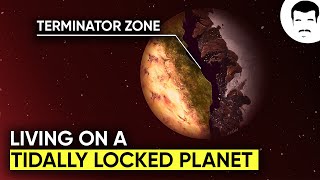
Aomawa Shields suggests that planets in synchronous rotation around M dwarf stars may potentially host life along the terminator line between the day and night sides.
“my team actually has some new work that shows that you could have life along the Terminator the dividing line between the day and the night side”
StarTalk · Jul 2023 · 2 episodes · 357K views on this topicKC
Larger planets with sufficient gravity can hold onto their atmospheres.
“if they're big enough if they have enough gravity they'll have enough yeah yeah right yeah they hold on to that because molecules of gas are fast moving and they really want to escape but you have enough gravity it'll hold them they'll hold you it'll hold you down”
StarTalk · Jul 2022 · 1 episode · 1.3M views on this topic
Exoplanets concentrate complex molecules and elements, making them essential locations for the development of life.
“planets are really special places is that right is that yeah very special because they do concentrate complex molecules they concentrate elements nutrients and everything we need”
StarTalk · Mar 2021 · 1 episode · 194K views on this topic
The current generation of telescopes allows for the detection of rocky, habitable planets orbiting other stars.
“we live in this time where with the James web Space Telescope Big telescope we put into space for the first time we can catch enough light to figure it out”
StarTalk · Jul 2024 · 1 episode · 1.3M views on this topicExtracted by a model; may misattribute who said what.
In the transcripts
Episodes discussing this topicIncludes episodes tagged with a narrower subject. Each is marked with the subject it came in through.


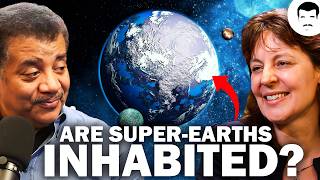


100%

Showing 10 of 26
Over time
Share of episodesThis topic's episodes as a share of every episode we analysed, in each complete month. We analyse more episodes every month, so a raw count would mostly show that growth. Recent months fill in as transcripts are analysed.
Complete months · first on record Jul 2019