Loading
Topic
Technology Regulation
- Episodes
- 8
- Communities
- 8
Over time
Mentions over time
Monthly episodes discussing this topic, 2022-11 to 2026-07.
Who's talking
Top voices on this topic
The people on the most episodes about this topic over the trailing three months, excluding their own shows — ordered by VoiceRank, their score across the whole corpus. The chart tracks each one’s episodes month by month.
2026-072026-082026-09
Where they stand
Talking points
Not enough disagreement in the transcripts to form camps. These are the positions taken by people with demonstrated expertise on this topic first, then by how many people heard them on it, then by VoiceRank.

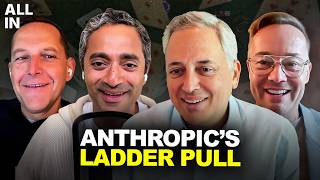
An SRO approach for AI is preferable to creating a new federal regulatory agency that could stifle innovation and lose the AI race to China.
“I would much rather go for Demis' SRO for AI, the self-regulatory approach. But we really have to keep it honest and pure because again otherwise it'll just be the opening bid in a coming new wave of regulation and it will be the vehicle for massive regulatory capture.”
The All-In Podcast · Jul 2026 · 2 episodes · 863K views on this topic
Establishing a self-governing body for AI is essential to prevent large actors from using capital to influence regulation and pull the ladder up on competition.
“I think it's really important and I hope it happens quickly. The thing we have to keep in mind is there's going to be a torrent of money that's going to try to influence both sides of the political aisle to regulate this in a way that creates some form of regulatory capture.”
The All-In Podcast · Jul 2026 · 2 episodes · 863K views on this topic
The AI industry should adopt a self-regulatory organization (SRO) model similar to FINRA, which allows industry experts to set standards while maintaining federal oversight but not direct control.
“So the SRO concept would be that experts could be brought in from industry that know how to assess models for things like cyber risk, for things like biorisk, for things like weapons risk, social manipulation, etc., etc. that independent body can get voted on, can get changed over time”
The All-In Podcast · Jul 2026 · 2 episodes · 863K views on this topic
The AI industry should implement a system of self-certification where industry players agree on testing standards to avoid direct government regulation.
“The industry should have an industry certification like they do for countless other things. I've talked about the MPAA and the video game industry. We should just self-certify. It's the simplest thing in the world to do. And then we could release the models ourselves without the government getting i”
The All-In Podcast · Jul 2026 · 2 episodes · 863K views on this topic
Government regulation should avoid imposing restrictive constraints on AI model parameters or sizes to ensure companies continue to innovate and release new versions.
“you want them running as fast as possible not having to have sort of this you know a Council before every model gets released because they're they're you know in fear of getting sued by you know the government for hundreds of millions of dollars if one person does something wrong with the model”
The All-In Podcast · Dec 2024 · 1 episode · 455K views on this topic
The FCC should remain an independent agency to insulate communications policy from political pressure.
“The reason you set all this up is to insulate it from political pressure because you don't want control of communications to be political”
The Verge · Dec 2025 · 1 episode · 22K views on this topic
There is a need for government intervention and regulation of the algorithms that govern social media platforms.
“I also think there's going to have to be government intervention and regulation on the algorithms around these platforms”
The Rest Is Politics · Nov 2022 · 1 episode · 11K views on this topic
Effective regulation of global technology platforms requires coordinated action between the United States and the European Union.
“so the only hope would be to get the US government and the European Union to do it together yeah that would be the only scale at which you'd have any hope of being able to regulate that”
The Rest Is Politics · Nov 2022 · 1 episode · 11K views on this topicPositions are extracted from transcripts by a model and may misattribute who said what. Every quote links to the episode it came from.
Related
Related topics · 15
In the transcripts
Episodes discussing this topic



95%

