Loading
Episode
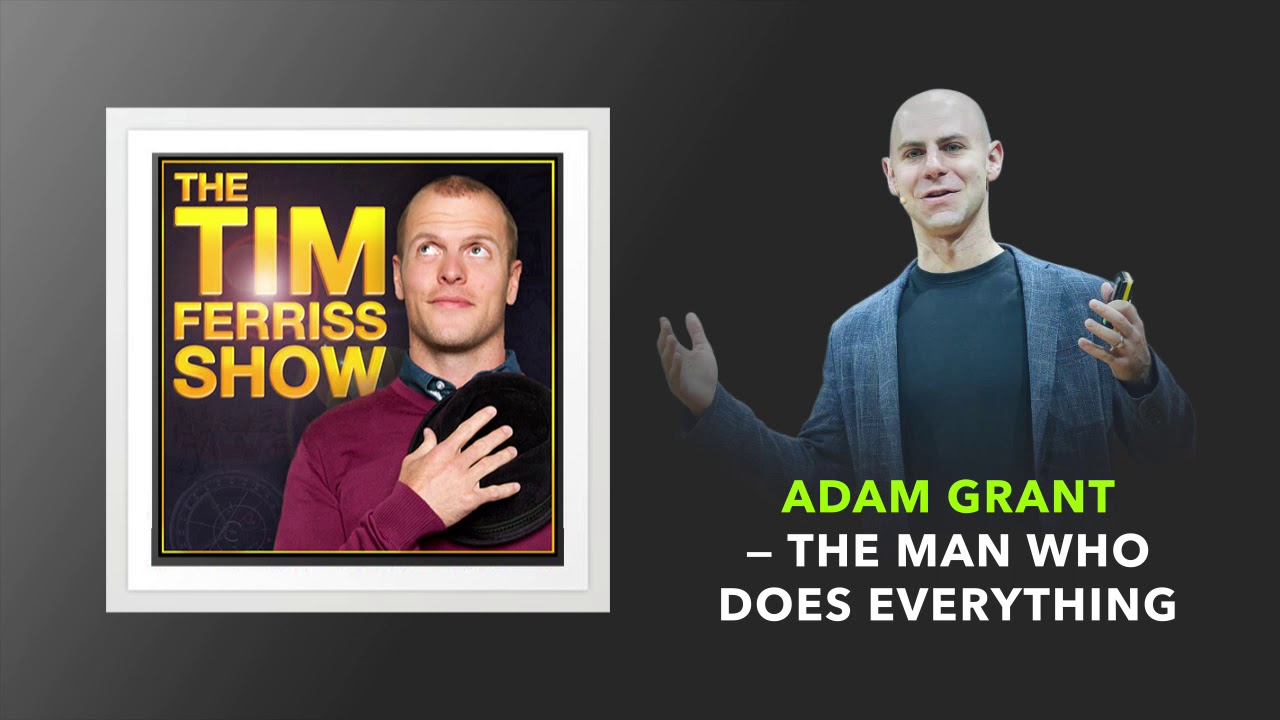
Adam Grant — The Man Who Does Everything | The Tim Ferriss Show

Views
17K
0.2× the show’s average
Episode17K
Show avg92K
Published
6y ago
Dec 7, 2019
Length
2h 04m
show avg 1h 53m
From the show
Description
Sign up for "5-Bullet Friday" and each Friday, you’ll get a short email from me with five things I've discovered that week, sending you off to your weekend with fun and useful things to ponder and try. 🙌 Sign up here for free: https://tim.blog/friday Adam Grant (@AdamMGrant) is an organizational psychologist at Wharton, where he has been the top-rated professor for seven straight years. He is an expert in how we can find motivation and meaning, and lead more generous and creative lives. He is the #1 New York Times bestselling author of four books that have sold over two million copies and been translated into 35 languages: Give and Take, Originals, Option B, and Power Moves. His books have been recognized as among the year’s best by Amazon, The Financial Times, Harvard Business Review, and The Wall Street Journal and been praised by J.J. Abrams, Richard Branson, Bill and Melinda Gates, Malcolm Gladwell, and Malala Yousafzai. Please enjoy! Start [00:00] Adam began his career as a professor who was so nervous he made his students physically shake in their seats. What was he teaching, and how did soliciting feedback from these students help him improve his form? [06:59] What is Adam’s challenge network, how did he assemble it, and what tips does he have for our listeners who want to not only survive criticism but grow from it? [18:03] What kind of informal challenge network do I currently utilize — especially when I’m writing? [27:36] What do the structure and frequency of Adam’s challenge network look like? [29:41] How does Adam turn praise — faint or otherwise — into something he can actually use? [31:54] Why does Adam keep a resume of his failures? [32:58] How did Adam accidentally write his first book, why did he throw away the majority of its first draft, and what simple advice did his agent offer that made him a more engaging writer by the time he was ready to write a viable second draft? [34:25] In spite of the fact that Adam doesn’t consider himself a wizard of time management, he still manages to get a lot done in a day. What does he manage well instead? [39:36] The efficacy of chunking or sprinkling good deeds, how Adam minimizes the chance he’ll break a time commitment, and how he makes up for it when it does happen. [47:47] How has the way I renegotiate broken commitments changed over time, and how has this changed the way I react when others have to break commitments to me? [54:19] What’s proper email protocol: inbox zero, or inbox infinity? [59:36] What are Adam’s processes for dealing with email? [1:02:55] How does Adam prioritize who gets time out of his day? What correspondence earns a categorical no? What common lie does Adam refuse to tell? [1:06:17] How does Adam ensure he’s not spending the majority of his life answering emails? What would prompt an intervention from his triage team, and where does an email go from there? Who makes up the triage team? [1:08:21] How does Adam choose projects? What’s the appeal of writing a book over a series of articles? [1:12:31] How does Adam determine if a project has succeeded or failed? For that matter, how do I? [1:15:49] In what ways can projects that seem like failures lead to success — or pay unexpected dividends? [1:17:39] What books does Adam recommend and gift most often? [1:26:12] Other tools and questions that have helped Adam further seek out his own blind spots. [1:30:43] Adam points out that not only do we have blind spots about our weaknesses, but we often have them about our strengths. He calls them bright spots. We compare how the Reflected Best Self Exercise and 360 interview process examine our blind and bright spots and guide us toward appropriate use of the information uncovered. [1:34:32] I reveal the typical structure of my weekly routines, and Adam weighs in on routines he’s changed up lately — including a conscious attempt to become less routine-driven. [1:41:31] Favorite bedtime podcasts. [1:46:10] What does Adam’s workout regimen look like, and what prompted the former junior Olympic springboard diver to recently revisit diving after a hiatus of more than a decade? [1:46:44] What would Adam’s billboard say? [1:48:12] A common productivity mistake Adam sees people make and how to navigate around it. [1:49:23] Adam asks me what big projects are currently in my sights, and what dream guests would I love to interview in the not-too-distant future? [1:51:34] Parting thoughts. [1:56:47]
Mentioned
Names dropped
Related
More with these guests

How to Unlock Your Full Potential with #1 Professor Adam Grant
72K viewsMel Robbins·Oct 22, 2026· With Adam Grant

Adam Grant: Fix Your Vibe
191K viewsTrevor Noah·Oct 15, 2026·With Adam Grant

You're Doing Relationships Wrong | Adam Grant
5K views10% Happier·Oct 14, 2026·With Adam Grant

Why your kid doesn't need a best friend | Dr. Becky and Adam Grant
53K viewsGood Inside·Oct 13, 2026·With Adam Grant

AI, the Loneliness Epidemic and Why Dax Seeks Out Embarrassment | Experts on Expert
63K viewsArmchair Expert with Dax Shepard·Oct 7, 2026·With Adam Grant

What Is Your Full Potential — with Adam Grant and Oprah
3.6M viewsOprah·Jan 6, 2026·With Adam Grant
Related
Talks about similar things

Am I Optimizing the Wrong Things?
28K viewsCal Newport·May 4, 2026
Woke Capital with Marc Andreessen
43K viewsColeman Hughes·Mar 4, 2023
How to Master Quick Decision Making with Adam Grant | Ep. 482
2K viewsThe Jordan Harbinger Show·Jul 1, 2021
Jim Collins — What to Make of a Life
57K viewsTim Ferriss·Mar 5, 2026

Life Begins At 40: How To Escape The 'Rat Race' & Take Back Control Of Your Life | Adam Grant
225K viewsDr Rangan Chatterjee·Nov 29, 2023

The Art of Non-Conformity with Chris Guillebeau | Cal Newport
7K viewsCal Newport·Jun 13, 2025