Loading
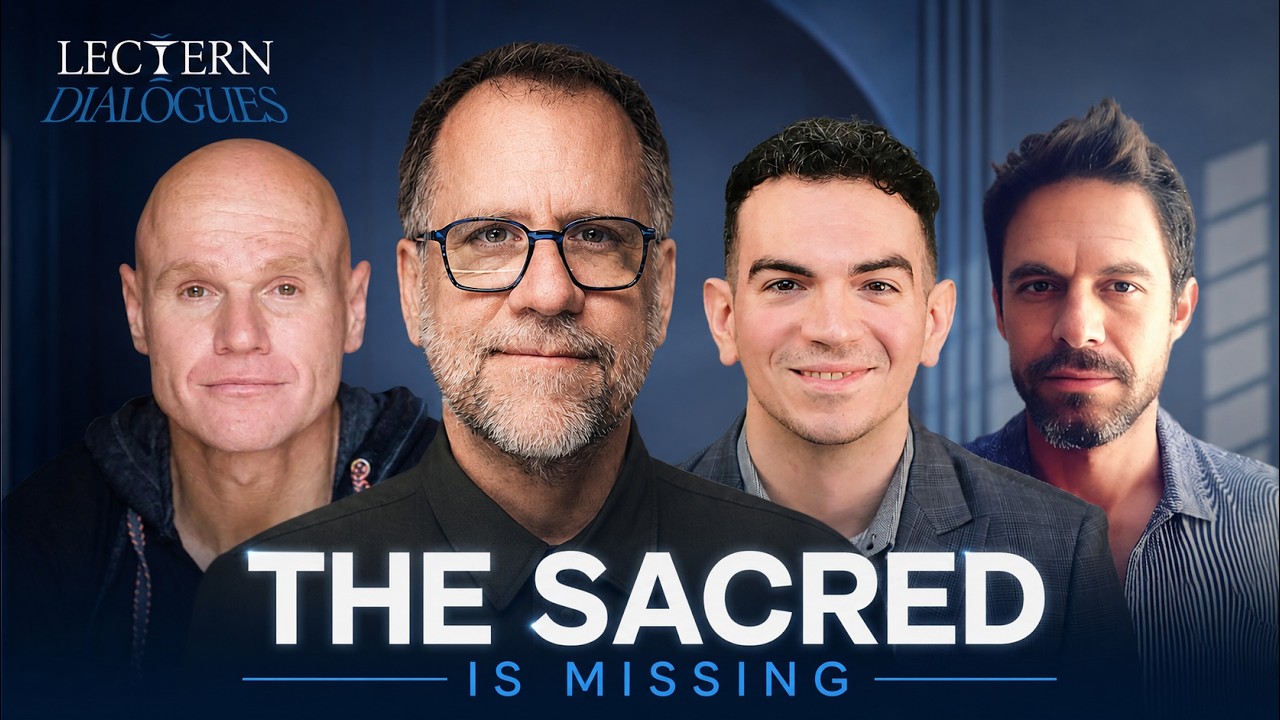
Episode
What Happens When a Culture Loses the Sacred?

Views
11K
1.3× the show’s average
Episode11K
Show avg8K
Published
3mo ago
Jun 18, 2026
Length
1h 40m
show avg 1h 18m
From the show
Chapters
What happens when a society possesses extraordinary technological power but lacks a shared sense of what that power is for? John Vervaeke, Jordan Hall, Guy Sengstock, and Christopher Mastropietro reunite for a sustained inquiry into normativity: the structures by which human beings perceive direction, value, responsibility, and the difference between better and worse action. The question becomes urgent in the context of artificial intelligence, where increasingly consequential decisions are being made inside a culture that struggles to articulate a coherent basis for judgment. The conversation begins with Guy's encounters with the AI community and the fear that humanity may soon make decisions it cannot reverse. From there, the group investigates modernity's technological understanding of being, the reduction of creation to artifacts, and the modern self's attachment to sole authorship. John and Jordan propose that meaning is participatory: intelligibility is not manufactured by isolated selves but emerges through shared authorship with other people, traditions, practices, and reality itself. The dialogue then turns toward virtue. If the problem is not simply ignorance but malformed attention and desire, knowing what should be done is insufficient. The deeper difficulty is how people become capable of wanting, perceiving, and participating in what is good. Socratic aporia, vulnerability, kenosis, embodied practice, pilgrimage, and dialogue are explored as ways of undergoing reorientation rather than merely acquiring information. In the final movement, the speakers discuss bad-faith dialogue, leisure, lingering, tourism, linguistic lostness, and doomscrolling. These apparently different subjects converge on one insight: when people remain sealed inside environments engineered around their existing capacities and preferences, they lose access to the forms of friction, surprise, and participation that can transform them. Key Insights Normativity is the directional structure through which actions appear better, worse, appropriate, or necessary. The AI crisis exposes a deeper cultural inability to answer what technology should serve. Modernity often confuses participation in creation with ownership of the resulting artifact. Meaning and intelligibility require shared authorship rather than sovereign individual control. Virtue cannot be transmitted as information alone; it requires transformed attention and participation. Embodied practices can reorganize abstractions because higher cognition remains rooted in sensorimotor life. Pilgrimage, leisure, and dialogos help people cross boundaries between worlds rather than consuming only familiar inputs. Doomscrolling is an efficient example of technology feeding hypertrophied capacities while narrowing participation in reality. Explore courses and teachings from The Lectern https://lectern.johnvervaeke.com/ Support the Lectern and join a growing community of wisdom seekers https://www.patreon.com/johnvervaeke John Vervaeke: https://johnvervaeke.com/ https://twitter.com/vervaeke_john https://www.youtube.com/@johnvervaeke https://www.patreon.com/johnvervaeke
- 0:00The group reunites
- 1:10Normativity as the central concern
- 2:40Guy's San Francisco radio work
- 5:20Inside an AI thought-leader conference
- 8:30The danger of irreversible technological decisions
- 13:50Intrinsic normativity and attention
- 16:00Liminal navigation and the limits of simulation
- 20:30Art, creation, and artifacts
- 23:00Heidegger's technological understanding of being
- 25:40Participation and shared authorship
- 28:30Modernity's reinforcing attractor
- 31:00Socratic aporia
Related
More with these guests

AI and the Meaning Crisis | Redefining Human Flourishing
John Vervaeke’s LecternMar 18, 2025

JH

Cultivating the Fellowship of Spiritual Practice with Christopher Mastropietro and Guy Sengstock
John Vervaeke’s LecternOct 11, 2023

After Socrates: Episode 24 - Why This? Why Now?
John Vervaeke’s LecternJun 10, 2023

Reconnect to the Real: Vervaeke, Sengstock, and Koch on Nature, Circling, and Socratic Practice
John Vervaeke’s LecternJul 25, 2026

John Vervaeke & Guy Sengstock: Why Modernity Can't See the Sacred Anymore
John Vervaeke’s LecternJul 12, 2026

Are We Losing Our Taste for the Real?
John Vervaeke’s LecternMay 21, 2026