Loading
Episode
The BEST EVER Cumulative Case for God


From the show
Description
Here I argue that God exists. In the next two parts, I'll argue for Catholic miracles, criticize non-Catholic explanations of the miraculous data, and respond to objections to Catholicism. Like the show? Help it grow! Consider becoming a patron (thanks!): https://www.patreon.com/majestyofreason If you wanna make a one-time donation or tip (thanks!): https://www.paypal.com/paypalme/josephcschmid RESOURCE DOCUMENT: https://docs.google.com/document/d/1qrECmtjhrnqJYtiOxOihJlCrNCPN_YDJ7hLIp-0U4Kg/edit?usp=sharing COMPREHENSIVE CASE playlist: https://www.youtube.com/playlist?list=PLOCzKNqINMWs OUTLINE 0:00 Intro and Outline 0:05:32 Catholic Upbringing 0:07:12 The Deconversion 0:12:52 The Agnostic Turn 0:15:27 Intro to the Contingency Argument 0:31:32 The Shift Toward Theism 0:33:32 Master Argument for Theism 0:36:10 First Premise: Theism’s Intrinsic Probability 0:56:24 Objections to the First Premise 1:02:30 Second Premise: Evidence for Theism 1:04:47 Contingency 1:08:46 Laws of Nature 1:10:52 Nomological Harmony 1:29:18 Fine-Tuning 1:51:11 Seventeen Objections to Fine-Tuning 3:09:52 Psychophysical Luck 3:46:56 Eight Objections to Psychophysical Luck 5:00:48 Non-Skepticism 5:35:02 Beauty and Aesthetic Experience 5:46:53 Religious Experience 6:16:10 Summary of the Evidence 6:24:13 Evidence Against Theism 6:25:36 The Problem of Evil 6:38:20 Hiddenness and religious diversity 6:45:05 Non-Naturalistic Alternatives to Theism 07:18:23 Summary: The Master Argument for Theism CORRECTIONS AND ADDENDA (1) I should have noted, when giving Pruss and Rasmussen's contingency argument in Part 3, that while I was very highly confident in this argument at the time, I'm less confident in it now. My main source of uncertainty nowadays is the second premise, as there might conceivably be an explanation of contingent things which both (i) doesn't invoke contingent things (and so is non-circular), but (ii) also doesn't invoke a necessary thing, because it's a non-entitative explanation (i.e., an explanation that doesn't cite the activity of any concrete things). Still, I think there are reasons to prefer an entitative to a non-entitative explanation here (e.g., the latter is strongly inductively disconfirmed). So, while Pruss and Rasmussen don't do the following in their formulation of the argument, I would either modify the explanatory principle to reference not just explanations but *entitative* explanations, or else modify the consequent of the second premise to 'probably some necessary thing exists'. THE USUAL... Follow the Majesty of Reason podcast! https://open.spotify.com/show/4Nda5uNcGselvKphtKSKvH My website: https://josephschmid.com My PhilPeople profile: https://philpeople.org/profiles/joseph-schmid
Covered · Topics
What was discussed
Mentioned
Names dropped in conversation
Related
Talks about similar things

The BEST Objections to Catholicism ANSWERED
Majesty of ReasonAug 28, 2026
90% similar
90K views
New Arguments for God Tier List w/ Joe Schmid
Capturing ChristianityAug 26, 2026
89% similar
67K views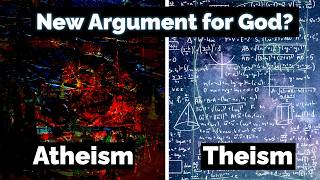
A NEW Argument for God?
Majesty of ReasonMar 8, 2026
90% similar
12K views
Debunking Arguments for God with Graham Oppy
Alex O'ConnorJan 4, 2026
90% similar
212K views
"I'm starting to think there might be a God" | Matthew Adelstein & Dustin Crummett
Capturing ChristianityFeb 10, 2024
90% similar
9K views