Loading
Episode
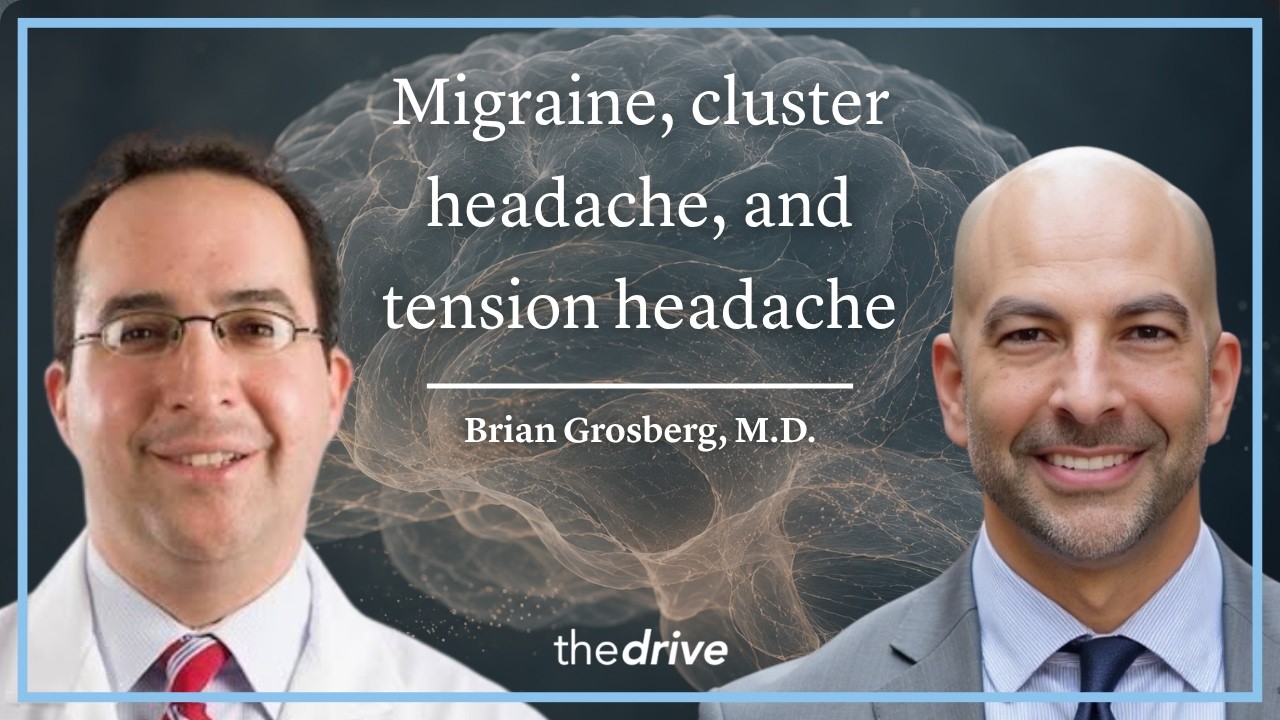
406 ‒ Migraine, cluster headache, and tension headache: symptoms, causes, prevention, and treatment

Views
42K
0.4× the show's usual
Length
2h 09m
usual ~2h 09m
From the show
Description
Brian Grosberg is a world-renowned headache specialist who joins Peter to provide a master class on the diagnosis and treatment of headache disorders. In this episode, Brian explains the distinction between primary and secondary headaches and breaks down the defining features of the "big three" primary headache types (migraine, cluster, and tension headache)—highlighting how often they are misdiagnosed and how they are treated. He explores the epidemiology of headaches, describing migraine as an invisible disease affecting about 12% of the population, disproportionately affecting women, while cluster headaches more often affect men. He discusses the major gap between demand for headache care and available specialists, and he offers advice on when to see a physician. Brian dives into the multifactorial nature and pathophysiology of migraine, including genetic and hormonal influences, neurovascular changes, and inflammatory signaling, and connects these mechanisms to modern therapies. Throughout the conversation, he emphasizes the individualized nature of headache disorders and the importance of a detailed headache diary. 0:00:00 - Intro 0:00:11 - Brian's interest in headaches and how Peter met Brian 0:07:30 - Differentiating the types of headaches: primary versus secondary headache and tension versus migraine headache 0:20:00 - The epidemiology and burden of migraine, its disproportionate affect on women, and the shortage of headache specialists 0:25:45 - Genetic susceptibility to migraine and the role of hormones 0:33:15 - Migraine triggers, the impact of hormones, and the importance of a headache diary 0:41:31 - The phases of a migraine: premonitory symptoms, aura, the headache itself, and the postdrome 0:45:23 - Tension headaches: symptoms, causes, and prevalence 0:47:11 - Cluster headaches: extreme pain, distinctive symptoms, and frequent misdiagnosis as a sinus infection or allergies 0:56:46 - Lifestyle interventions to prevent headaches 1:12:00 - Pharmacological treatments to prevent headaches 1:23:12 - What's known about the pathophysiology of migraines: neurovascular changes, release of neuropeptides, and inflammatory response 1:29:12 - CGRP antagonists for the treatment of migraines: large monoclonal antibodies and gepants 1:38:52 - Use of calcium channel blockers and Botox to treat cluster headache and migraine 1:43:35 - Drugs for the acute treatment of migraines 1:52:13 - Treatment of migraines with electrical stimulation devices 1:57:03 - Use of THC or cannabis to treat headaches 1:59:04 - What Brian wants people to know about headaches 2:03:03 - Brian's advice on when to see a doctor about headaches and how to prepare for that visit View show notes here: https://peterattiamd.com/briangrosberg/ Become a member to receive exclusive content: https://peterattiamd.com/subscribe/ Sign up to receive Peter's email newsletter: https://peterattiamd.com/newsletter/ -------- About: The Peter Attia Drive is a deep-dive podcast focusing on maximizing longevity, and all that goes into that from physical to cognitive to emotional health. With over 90 million episodes downloaded, it features topics including exercise, nutritional biochemistry, cardiovascular disease, Alzheimer’s disease, cancer, mental health, and much more. Peter Attia is the founder of Early Medical, a medical practice that applies the principles of Medicine 3.0 to patients with the goal of lengthening their lifespan and simultaneously improving their healthspan. Learn more: https://peterattiamd.com Connect with Peter on: Facebook: http://bit.ly/PeterAttiaMDFB Twitter: http://bit.ly/PeterAttiaMDTW Instagram: http://bit.ly/PeterAttiaMDIG Subscribe to The Drive: Apple Podcast: http://bit.ly/TheDriveApplePodcasts Overcast: http://bit.ly/TheDriveOvercast Spotify: http://bit.ly/TheDriveSpotify Google Podcasts: http://bit.ly/TheDriveGoogle Disclaimer: This podcast is for general informational purposes only and does not constitute the practice of medicine, nursing, or other professional healthcare services, including the giving of medical advice. No doctor-patient relationship is formed. The use of this information and the materials linked to this podcast is at the user's own risk. The content on this podcast is not intended to be a substitute for professional medical advice, diagnosis, or treatment. Users should not disregard or delay in obtaining medical advice for any medical condition they have, and they should seek the assistance of their healthcare professionals for any such conditions. I take conflicts of interest very seriously. For all of my disclosures and the companies I invest in or advise, please visit my website where I keep an up-to-date and active list of such companies. For a full list of our registered and unregistered trademarks, trade names, and service marks, please review our Terms of Use: https://peterattiamd.com/terms-of-use/
Covered · Topics
What was discussed
Related
Talks about similar things

Morning News NOW Full Episode – Sept. 2
NBC NewsSep 2, 2026
85% similar
56K views
What to Eat to BEAT Alzheimer's - Dr. David Perlmutter
Max LugavereAug 19, 2026
83% similar
13K views
407 ‒ Preventing cardiovascular and Alzheimer’s disease: lowering LDL early, APOE4, and more
The Peter Attia DriveSep 14, 2026
82% similar
30K views
How To Heal Hair, Skin Problems, Autoimmune Disease & Inflammation | Sarah Rahal
Max LugavereJun 28, 2023
85% similar
70K views
Felony Conviction After Refusing Mask Mandate: Navy Veteran Tim Hazelo Fights Back – Ask Dr. Drew
Dr. DrewJul 23, 2026
82% similar
3K views
300,000 Brain Scans Reveal This About Brain Health & Chronic Pain! - Dr. Daniel Amen
Max LugavereDec 4, 2025
83% similar
3K views