Loading
Episode
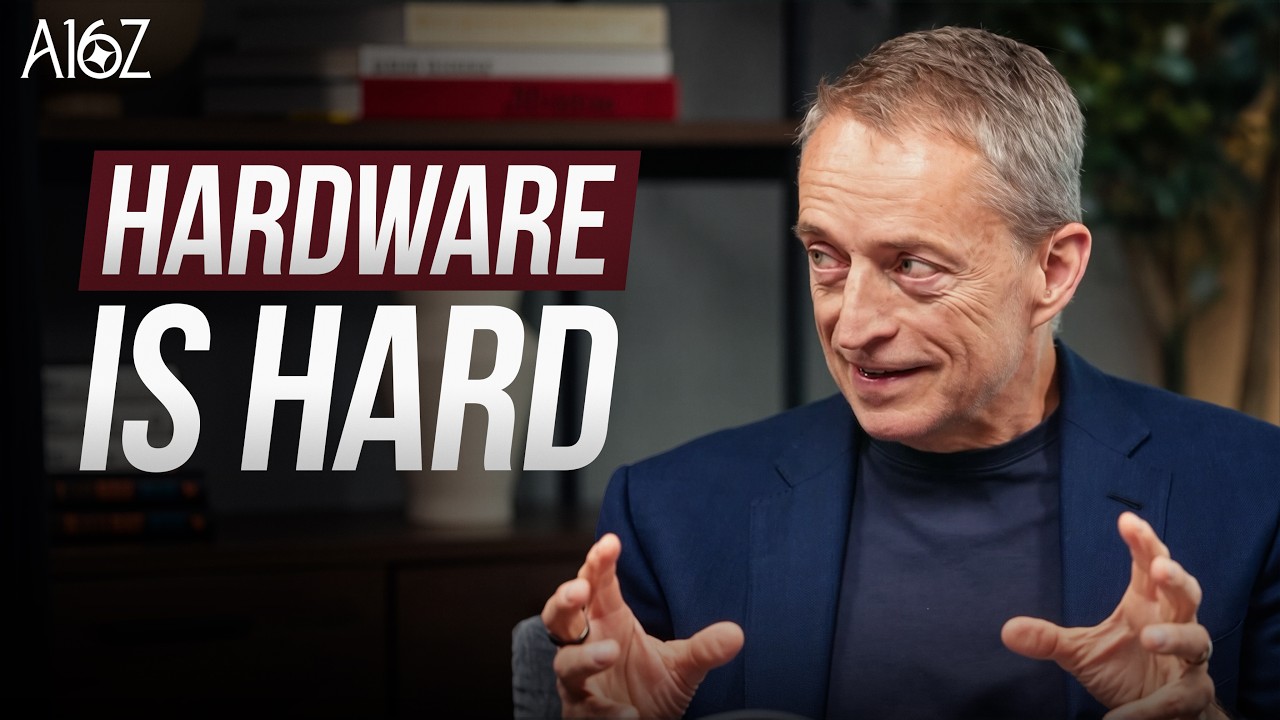
Former Intel CEO: Why This is the Best Time to Build Hardware
Views
19K
1.0× the show’s average
Episode19K
Show avg19K
Published
3d ago
Oct 9, 2026
Length
53m
show avg 48m
From the show
Chapters
a16z's Raghu Raghuram and Guido Appenzeller sit down with Playground Global General Partner and former Intel CEO Pat Gelsinger to discuss the next wave of semiconductor innovation and the physical constraints shaping the AI buildout. Drawing on his experience designing Intel's 386 and 486 processors, Pat explains how AI could transform chip design, but also why faster design alone won't solve the industry's biggest problems. They examine the bottlenecks in manufacturing, memory bandwidth, advanced packaging, and power, and why today's explosion of specialized AI chips may eventually consolidate around a smaller number of architectures. They also discuss the potential for new memory technologies, the shift from copper to optical networking, and why energy capacity could become a major constraint on AI growth. Finally, they revisit Pat's VMware years to ask what virtualization might look like when infrastructure is built for agents rather than humans. Resources: Follow Pat Gelsinger on X: https://x.com/PGelsinger Follow Raghu Raghuram on X: https://x.com/RaghuRaghuram Follow Guido Appenzeller: https://x.com/appenz Stay Updated: If you enjoyed this episode, be sure to like, subscribe, and share with your friends! Find a16z on X: https://twitter.com/a16z Find a16z on LinkedIn: https://www.linkedin.com/company/a16z Listen to the a16z Show on Spotify: https://open.spotify.com/show/5bC65RDvs3oxnLyqqvkUYX Listen to the a16z Show on Apple Podcasts: https://podcasts.apple.com/us/podcast/a16z-podcast/id842818711 Follow our host: https://x.com/eriktorenberg Please note that the content here is for informational purposes only; should NOT be taken as legal, business, tax, or investment advice or be used to evaluate any investment or security; and is not directed at any investors or potential investors in any a16z fund. a16z and its affiliates may maintain investments in the companies discussed. For more details please see http://a16z.com/disclosures.
- 0:00Intro
- 1:00From tech school to Intel at 18
- 5:44The 486 and the birth of modern EDA
- 7:23How AI changes chip design
- 9:18Why silicon still takes nine months
- 14:49Will 100 AI chips converge to a few?
- 22:08Why HBM is a hideous memory
- 25:15How tall can chips get?
- 42:49Energy capacity equals economic capacity
- 48:42A VMware for agents
Mentioned
Names dropped
Related
More with these guests

Former Intel CEO on What Went Wrong, What's Next + Lovable CEO on the Real Promise of Vibe Coding
74K viewsThe All-In Podcast·Jul 15, 2026· With Pat Gelsinger
Related
Talks about similar things

Why Top Founders Are Racing Into AI Infrastructure
119K viewsa16z·Aug 28, 2026

Open Source Wins, AGI Is Here, and Scorsese’s AI Toolkit with CEOs of Cerebras & Black Forest Labs
125K viewsThe All-In Podcast·Jul 10, 2026

Coinbase CEO's Top 3 Crypto Trends for 2026 + More from Davos!
141K viewsThe All-In Podcast·Jan 23, 2026
20K views


Four CEOs on the Future of AI: CoreWeave, Perplexity, Mistral, and IREN
172K viewsThe All-In Podcast·Mar 23, 2026

The IPO Comeback: Why Tech Giants Are Finally Going Public | All-In Liquidity IPO Panel
146K viewsThe All-In Podcast·Jun 6, 2026