Loading
Topic
Large Language Models
- Episodes
- 15+22 narrower
- Communities
- 6
Over time
Mentions over time
Monthly episodes discussing this topic, 2023-03 to 2026-04.
Where they stand
Camps of opinion · 3
Positions people took on this topic in transcripts, grouped by school of thought. Within a camp, people with demonstrated expertise on the topic come first, then those who reached the most listeners on it. Every quote links to the episode it came from.
Scale model training
Scaling neural networks through increased data and compute consistently improves performance and capabilities.
4 people · 4 episodes

Scaling up neural networks linearly with more data, compute, and training time consistently improves model performance.
“I noticed that the model started to do better and better as you gave them more data as you as you made the models larger as you trained them for longer”
Lex Fridman Podcast · Nov 2024 · 1 episode · 5.2M views on this topic
Large Language Models are the viable path toward superintelligence as they are being improved through new methods like reasoning and architectural changes.
“so I don't think there's anything fundamentally wrong with the LLM architecture and I don't think we're fundamentally compute or data constrained. I think that there are so many people focused on this problem now. There are just going to be more and more um you know breakthroughs coming.”
Alex Kantrowitz · Nov 2025 · 1 episode · 20K views on this topic
Large language models should be developed and scaled because their underlying capabilities emerge through the process of predicting the next token.
“And there we knew, you've got to scale this thing, you've got to see where it goes.”
TED · Apr 2023 · 1 episode · 1.9M views on this topicAD
Current language models are not hitting fundamental limits and significant progress will continue through innovations within the existing paradigm.
“I don't see a reason why we don't eventually get there. That may take five, 10, 15 years. But I think until you get there, we're going to get bottlenecked on the things that the LM still can't do”
a16z · Nov 2025 · 1 episode · 20K views on this topicLimit model capabilities
Language models lack true understanding, reasoning, or innovation, and possess inherent limitations in their current architecture.
2 people · 2 episodes

Autoregressive large language models are limited because they lack understanding of the physical world, persistent memory, reasoning, and planning capabilities.
“they don't really understand the physical world don't really have persistent memory they can't really reason and they certainly can't plan”
Lex Fridman Podcast · Mar 2024 · 1 episode · 1.3M views on this topicNK
Large language models provide outputs based on existing data and lack the capacity for true innovation or understanding of human intent.
“whatever it's going to output and throw out of you, that's old news. It has already seen it somewhere, it's already someone else's, right? And we need new stuff”
StarTalk · Sep 2025 · 1 episode · 311K views on this topicStandardize prompt practices
Effective interaction with models requires structured, iterative, and role-based techniques to achieve high-quality outcomes.
2 people · 2 episodes
TG
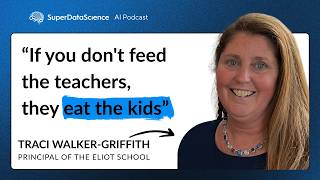
Effective prompt engineering for education requires an iterative process where educators work together to refine prompts to avoid generic or low-quality feedback.
“The first one definitely was this idea of generic feedback. If we didn't actually give it what you know, Claude or or Gem the the correct way in which we were thinking about giving feedback, it was just so generic like, "Great job."”
Super Data Science: ML & AI Podcast with Jon Krohn · Apr 2026 · 1 episode · 137K views on this topicBF
Effective prompts for AI require assigning a specific role, using trusted data sources, and providing a clear, step-by-step structure.
“The clearer you can be with the instructions you wanted to follow, the better the information you will get back.”
Afford Anything Podcast · Nov 2025 · 1 episode · 1K views on this topicPositions are extracted from transcripts by a model and may misattribute who said what. Every quote links to the episode it came from.
Rolls up here
Narrower subjects · 18
Related
Related topics · 15
In the transcripts
Episodes discussing this topic
Includes episodes tagged with a narrower subject — each is marked with the subject it came in through.




State of AI in 2026: LLMs, Coding, Scaling Laws, China, Agents, GPUs, AGI | Lex Fridman Podcast #490
95%


Showing 10 of 30