Loading
Episode
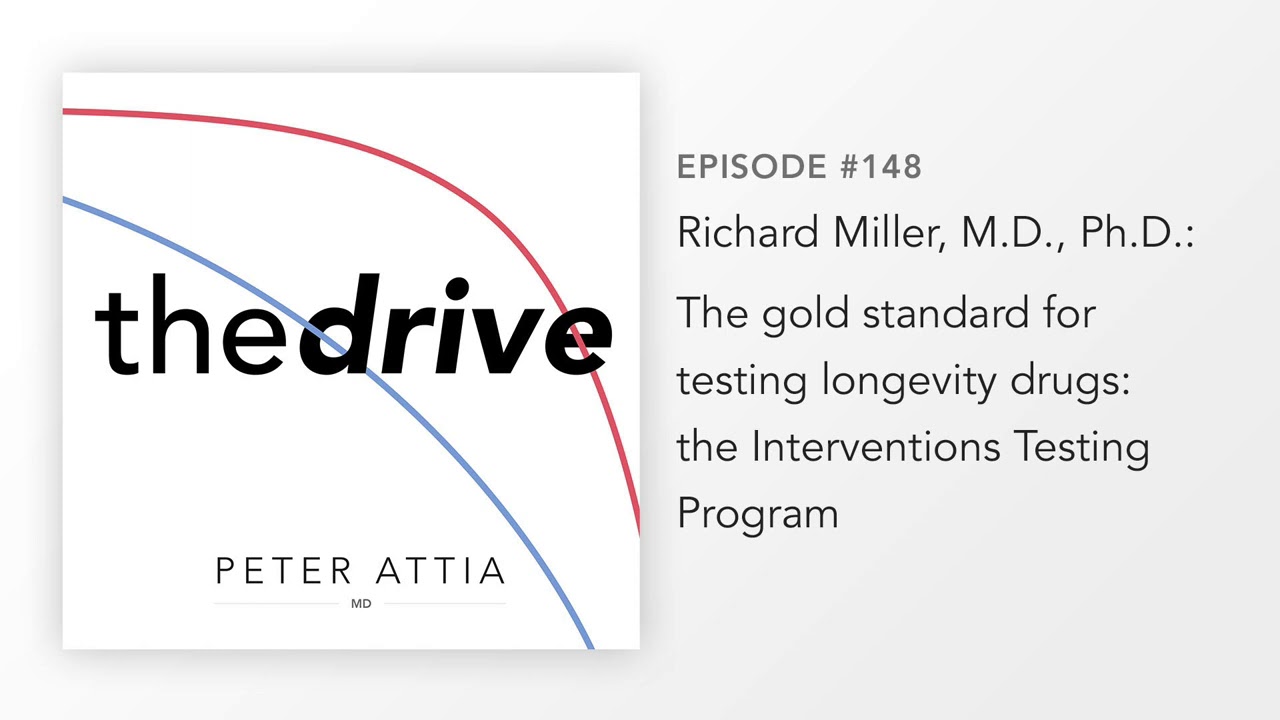
#148 - Richard Miller, M.D., Ph.D.: The gold standard for testing longevity drugs: the ITP

Views
13K
0.1× the show’s average
Episode13K
Show avg117K
Published
5y ago
Feb 8, 2021
Length
2h 14m
show avg 2h 09m
From the show
Chapters
Sign up to receive Peter's email newsletter: https://bit.ly/4c602k2 Richard Miller is a professor of pathology and the Director of the Center for Aging Research at the University of Michigan. He is one of the architects of the NIA-funded Interventions Testing Programs (ITPs) animal study test protocol. In this episode, Rich goes through the results of the long list of molecules tested by the ITP—including rapamycin, metformin, nicotinamide riboside, an SGLT-2 inhibitor called canagliflozin, and more. Many of the discussed outcomes have had surprising outcomes—both positive and negative findings. We discuss: Show notes page: https://peterattiamd.com/richardmiller/ About: The Peter Attia Drive is a weekly, ultra-deep-dive podcast focusing on maximizing health, longevity, critical thinking…and a few other things. With over 30 million episodes downloaded, it features topics including fasting, ketosis, Alzheimer’s disease, cancer, mental health, and much more. Peter is a physician focusing on the applied science of longevity. His practice deals extensively with nutritional interventions, exercise physiology, sleep physiology, emotional and mental health, and pharmacology to increase lifespan (delay the onset of chronic disease), while simultaneously improving healthspan (quality of life). Learn more: https://peterattiamd.com/ Subscribe to receive exclusive subscriber-only content: https://peterattiamd.com/subscribe/ Sign up to receive Peter's email newsletter: https://peterattiamd.com/newsletter/ Connect with Peter on: Facebook: http://bit.ly/PeterAttiaMDFB Twitter: http://bit.ly/PeterAttiaMDTW Instagram: http://bit.ly/PeterAttiaMDIG Subscribe to The Drive: Apple Podcast: http://bit.ly/TheDriveApplePodcasts Overcast: http://bit.ly/TheDriveOvercast Spotify: http://bit.ly/TheDriveSpotify Google Play: http://bit.ly/TheDriveGooglePlay
- 0:00Intro
- 3:45Rich’s interest in aging, and how Hayflick’s hypothesis skewed aging research
- 15:00Dispelling the myth that aging can’t be slowed
- 29:00The Interventions Testing Program—A scientific framework for testing whether drugs extend lifespan in mice
- 38:45Testing aspirin in the first ITP cohort
- 44:45Rapamycin: results from ITP studies, dosing considerations, and what it tells us about early- vs. late-life interventions
- 1:07:15Acarbose as a potential longevity agent by virtue of its ability to block peak glucose levels
- 1:15:45Resveratrol: why it received so much attention as a longevity agent, and the takeaways from the negative results of the ITP study
- 1:24:15The value in negative findings: ITP studies of green tea extract, methylene blue, curcumin, and more
- 1:27:0017α-Estradiol: lifespan effects in male mice, and sex-specific effects of different interventions
- 1:33:15Testing ursolic acid and hydrogen sulfide: rationale and preliminary results
- 1:35:45Canagliflozin (an SGLT2 inhibitor): exploring the impressive lifespan results in male mice
Mentioned
Names dropped
Related
More with these guests

333 ‒ Longevity roundtable—the science of aging, geroprotective molecules, & lifestyle interventions
104K viewsThe Peter Attia Drive·Jan 27, 2025·With Richard Miller
RM
281 ‒ Longevity drugs, aging biomarkers, and updated findings from the Interventions Testing Program
75K viewsThe Peter Attia Drive·Dec 4, 2023·With Richard Miller
RM
Related
Talks about similar things
281 ‒ Longevity drugs, aging biomarkers, and updated findings from the Interventions Testing Program
75K viewsThe Peter Attia Drive·Dec 4, 2023

222 ‒ How nutrition impacts longevity | Matt Kaeberlein, Ph.D.
225K viewsThe Peter Attia Drive·Sep 12, 2022

Can We Cheat Death? Nobel Prize Winner Breaks Down the Science of Living Forever | Dr Karan
7K viewsDr Karan·Feb 14, 2025

Supplements for Longevity & Their Efficacy | Dr. Peter Attia
365K viewsHuberman Lab·Jul 29, 2024

The Life-Extension Episode With Dr. Matt Kaeberlein | The Tim Ferriss Show
13K viewsTim Ferriss·Aug 1, 2022
171- Longevity science: caloric restriction studies, aging biomarkers & possible longevity molecules
75K viewsThe Peter Attia Drive·Aug 9, 2021