Loading
Episode
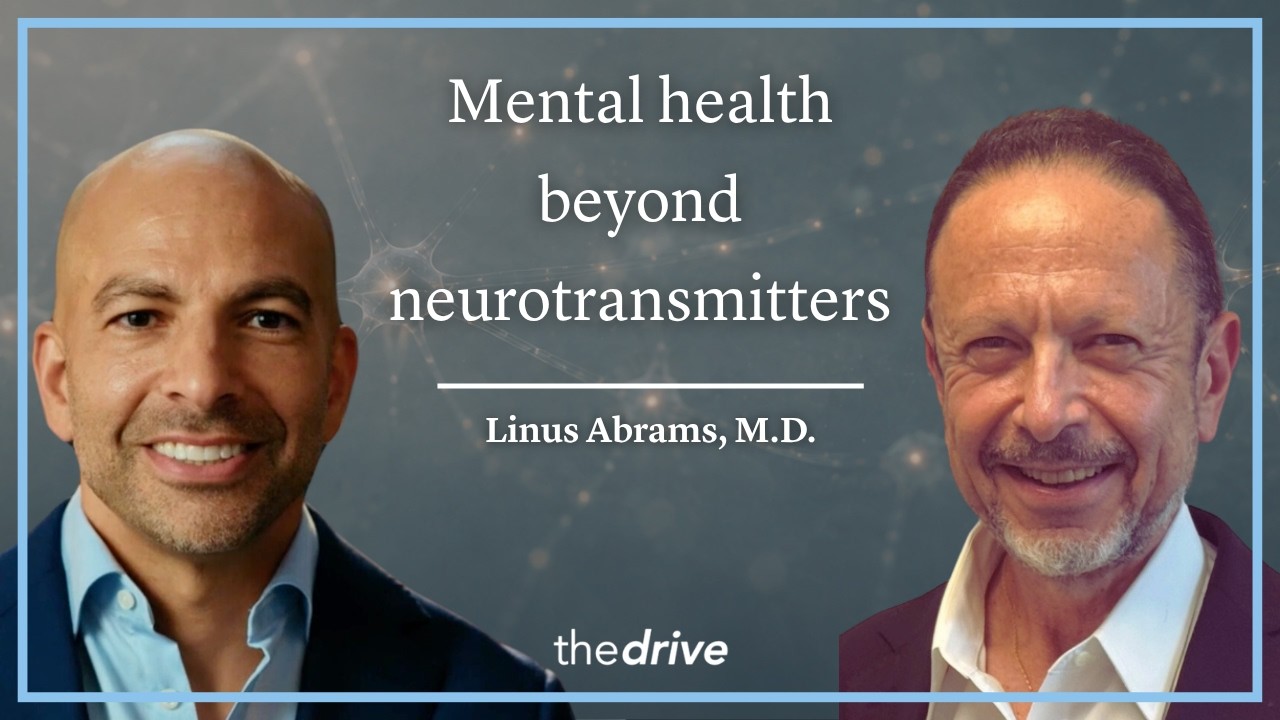
404 ‒ Mental health beyond neurotransmitters: hormones in psychiatry, psychedelic therapies, & more

Views
18K
0.1× the show’s average
Episode18K
Show avg118K
Published
2mo ago
Aug 17, 2026
Length
2h 19m
show avg 2h 09m
From the show
Chapters
In this episode, Peter sits down with Dr. Linus Abrams, a psychiatrist with nearly 35 years of clinical experience specializing in mood disorders and psychopharmacology, to explore how our understanding of mental health is evolving beyond the traditional neurotransmitter model. After decades in practice, Linus began questioning many of the assumptions underlying modern psychiatry, leading him to investigate how hormones, metabolism, inflammation, circadian biology, and the endocrine system shape mood and cognition. Together, Peter and Linus examine why psychiatric care should aim not only to reduce symptoms but also to restore the full human experience. They discuss how psychiatric medications work, where they fall short, and why distinguishing bipolar disorder from unipolar depression is essential for effective treatment. The conversation also explores the growing mental health burden of social isolationn associated with digital devices and social media, along with the biological factors—nutrition, exercise, sleep, and chronic stress—that influence resilience and distress tolerance. View show notes here: https://peterattiamd.com/linusabrams/ Become a member to receive exclusive content: https://peterattiamd.com/subscribe/ Sign up to receive Peter's email newsletter: https://peterattiamd.com/newsletter/ -------- About: The Peter Attia Drive is a deep-dive podcast focusing on maximizing longevity, and all that goes into that from physical to cognitive to emotional health. With over 90 million episodes downloaded, it features topics including exercise, nutritional biochemistry, cardiovascular disease, Alzheimer’s disease, cancer, mental health, and much more. Peter Attia is the founder of Early Medical, a medical practice that applies the principles of Medicine 3.0 to patients with the goal of lengthening their lifespan and simultaneously improving their healthspan. Learn more: https://peterattiamd.com Connect with Peter on: Facebook: http://bit.ly/PeterAttiaMDFB Twitter: http://bit.ly/PeterAttiaMDTW Instagram: http://bit.ly/PeterAttiaMDIG Subscribe to The Drive: Apple Podcast: http://bit.ly/TheDriveApplePodcasts Overcast: http://bit.ly/TheDriveOvercast Spotify: http://bit.ly/TheDriveSpotify Google Podcasts: http://bit.ly/TheDriveGoogle Disclaimer: This podcast is for general informational purposes only and does not constitute the practice of medicine, nursing, or other professional healthcare services, including the giving of medical advice. No doctor-patient relationship is formed. The use of this information and the materials linked to this podcast is at the user's own risk. The content on this podcast is not intended to be a substitute for professional medical advice, diagnosis, or treatment. Users should not disregard or delay in obtaining medical advice for any medical condition they have, and they should seek the assistance of their healthcare professionals for any such conditions. I take conflicts of interest very seriously. For all of my disclosures and the companies I invest in or advise, please visit my website where I keep an up-to-date and active list of such companies. For a full list of our registered and unregistered trademarks, trade names, and service marks, please review our Terms of Use: https://peterattiamd.com/terms-of-use/
- 0:00Intro
- 0:11Linus's passion for understanding his patients and going beyond traditional psychiatry
- 10:24A short primer on the different classes of drugs used in psychiatry
- 24:12Evaluation of a patient with bipolar disorder
- 32:00An evolutionary perspective on depression
- 39:41Changes in the modern world triggering mental health problems
- 47:15An evolutionary perspective on insomnia
- 48:54Peter's window analogy to understand distress tolerance and irritability
- 51:46The impact of foundational biological factors on psychiatry: nutrition, exercise, sleep, and endocrinology
- 57:54The effect of estradiol on neurotransmitters in the brain
- 1:11:05Options for increasing testosterone in men, and why clomiphene is inferior to exogenous testosterone
- 1:14:37The rapid drop in progesterone is linked to both premenstrual dysphoric disorder (PMDD) and postpartum depression
Related
Talks about similar things

Essentials: Psychedelics & Neurostimulation for Brain Rewiring | Dr. Nolan Williams
62K viewsHuberman Lab·Jun 4, 2026

Hijacked Brains: The Science of Addiction and How to Heal
4K viewsAmenClinics·Jun 22, 2026

This Lie Keeps Your Body From Healing & The One Phrase That Sets You Free | Dr. Paul Conti
197K viewsDr. Mayim Bialik·May 15, 2026

How to Improve Motivation & Overcome Procrastination | Dr. Masud Husain
364K viewsHuberman Lab·Aug 24, 2026

Dr. Andrew Huberman — Peptides, Performance, and Protocols
173K viewsTim Ferriss·Jul 22, 2026
Why We're All So Unhappy-Arthur Brooks
336K viewsSoft White Underbelly·Apr 22, 2026