Loading
Episode
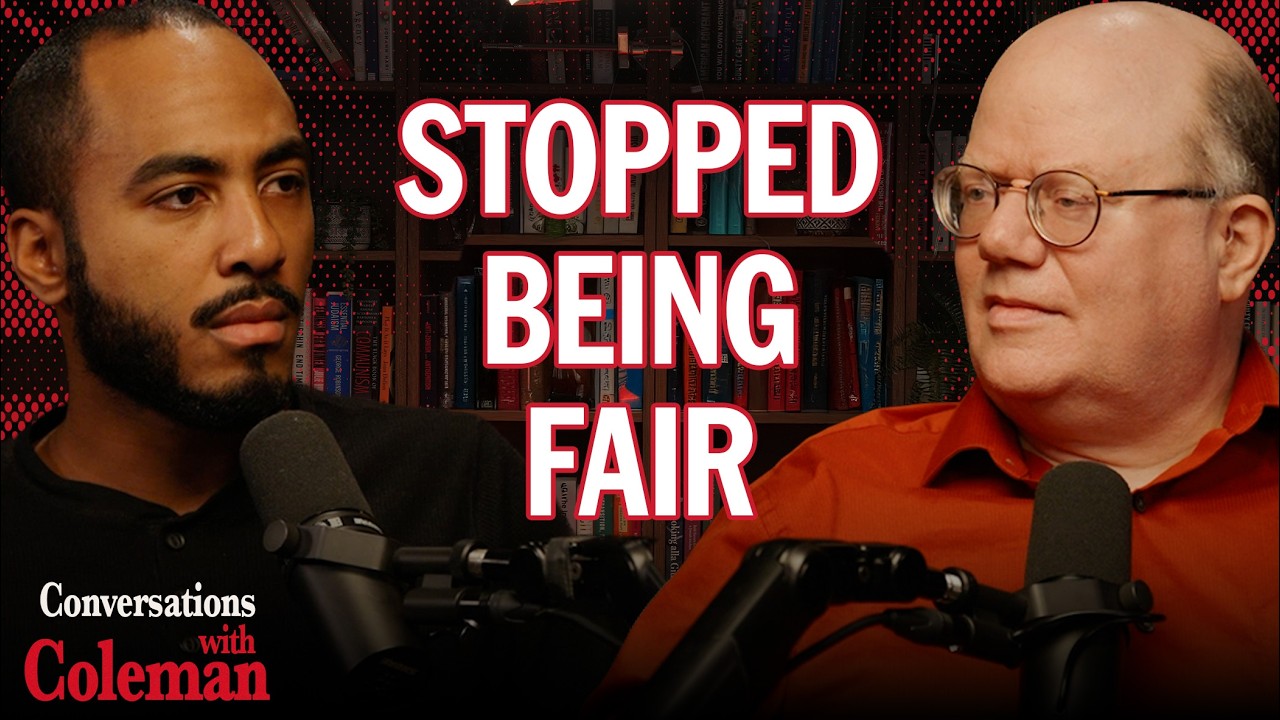
How Wikipedia Got "Radicalized"

YouTube views
12K
Still accruing views
So far12K
Show avg70K
Published
1d ago
Nov 28, 2026
Length
41m
show avg 1h 15m
From the show
Chapters
Every teacher I had told me never to trust Wikipedia, and even at 9 or 10 I thought they had it backward. Larry Sanger, who helped launch the site, partly sides with them: An encyclopedia is a summary of summaries, he says, and serious work belongs with primary sources. His own plan was different. He was assigned to build a free encyclopedia reviewed by experts, with Wikipedia as the feeder, until the feeder swallowed the project. The volunteers hated the idea of experts approving their work, Sanger says, and Jimmy Wales didn’t back him, which is one of the reasons he left for good. I call Sanger a co-founder, with the caveat that Wales has disputed sharing that title. Sanger helped write the neutrality policy for that earlier project, so I asked whether neutrality even exists. People can be objective or not, he told me, but neutrality belongs to texts, and it’s what we expect from textbooks, journalism, and reference works. An impartial article on creationism would lay out the creationist case in full, then the critics’ replies, until you couldn’t tell which side the writer was on. By that standard he dates Wikipedia’s slide to about 2005, and says that by 2010 it sounded like The New York Times or the BBC. Not exactly propaganda, he told me, “except insofar as The New York Times counts as propaganda.” He marks the sharpest turn in 2016. Donald Trump’s election and Brexit, Sanger says, convinced a lot of people that neutral journalism had failed, and the CEO of Wikipedia’s parent organization took the same lesson. I asked for the strongest case for anonymity, since the site’s most impactful editors are mostly anonymous, roughly 85 percent by his estimate. He’s a fan of anonymity online and helped make Wikipedia anonymous, he said, but he finds it bizarre that the people with the most power over it are the ones no one can name. Still, Sanger doesn’t think the site is a lost cause. You can still edit it, he says, if you have enormous patience and stay polite. Sanger’s also building WikiCritic, a site that gathers public reviews of Wikipedia articles, including from well-known people unhappy with what’s written about them. Wikipedia, by contrast, has never had a formal review system. The stakes, he argues, go beyond one website. AI learns from Wikipedia to a great extent, Sanger says, and a few hundred editors, many of them unidentified, do most of the real work there. If he’s right, the next draft of history is being written by people most of us couldn’t name.
- 0:00Intro
- 0:37How Larry Sanger Started Wikipedia
- 2:43Nupedia, Experts and the Fight Over Gatekeepers
- 4:12Is Larry Sanger Really a Co-Founder?
- 4:56Why Larry Walked Away From Wikipedia
- 8:30Why Teachers Told Kids Never to Trust Wikipedia
- 13:11Is Neutrality Even Possible?
- 16:20How Early Wikipedia Enforced Neutrality
- 18:11What a Neutral Creationism Article Looks Like
- 19:40When Wikipedia Started Sounding Like The New York Times
- 22:55The Perennial Sources List
- 24:36Resistance Journalism and the Trump Moment
Mentioned
Names dropped

Related
More with these guests

Wikipedia Co-Founder Exposes The Information Cult Destroying Our Civilisation
68K viewsWinston Marshall·Oct 20, 2026· With Larry Sanger

Can You Trust Wikipedia? Co-Founder Larry Sanger on Wikipedia’s Bias and Why He Was Banned
4K viewsSkeptic·Jul 29, 2026·With Larry Sanger

The Existence of God & Biblical Occultism | Larry Sanger
47K viewsCamp Gagnon·Feb 3, 2026·With Larry Sanger

Wikipedia Co-Founder EXPOSES The Solution to Secret Writers
15K viewsCamp Gagnon·Jan 27, 2026·With Larry Sanger

"YOUR WELCOME" with Michael Malice #388: Larry Sanger
14K viewsMichael Malice·Nov 5, 2025·With Larry Sanger

Wikipedia Co-Creator Reveals All: CIA Infiltration, Banning Conservatives, & How to Fix the Internet
640K viewsTucker Carlson·Sep 29, 2025·With Larry Sanger
Related
Talks about similar things

Kat Tenbarge Finally Speaks Out About Ethan Klein
1.3M viewsHasanAbi·Nov 16, 2026·3 shared topics

He Exposed Them
52K viewsHutch·Oct 30, 2026·3 shared topics

The Real Reason Instagram Feels Worse
29K viewsTaylor Lorenz·Oct 21, 2026·3 shared topics
Wikipedia Co-Founder Exposes The Information Cult Destroying Our Civilisation
68K viewsWinston Marshall·Oct 20, 2026·3 shared topics

The Hugging Face Scandal: Is AI Dangerous? | Red Thread
44K viewsThe Official Channel·Oct 18, 2026·3 shared topics
Apple's HomeView has an app problem | The Vergecast
63K viewsThe Verge·Oct 16, 2026·3 shared topics