Loading
Episode
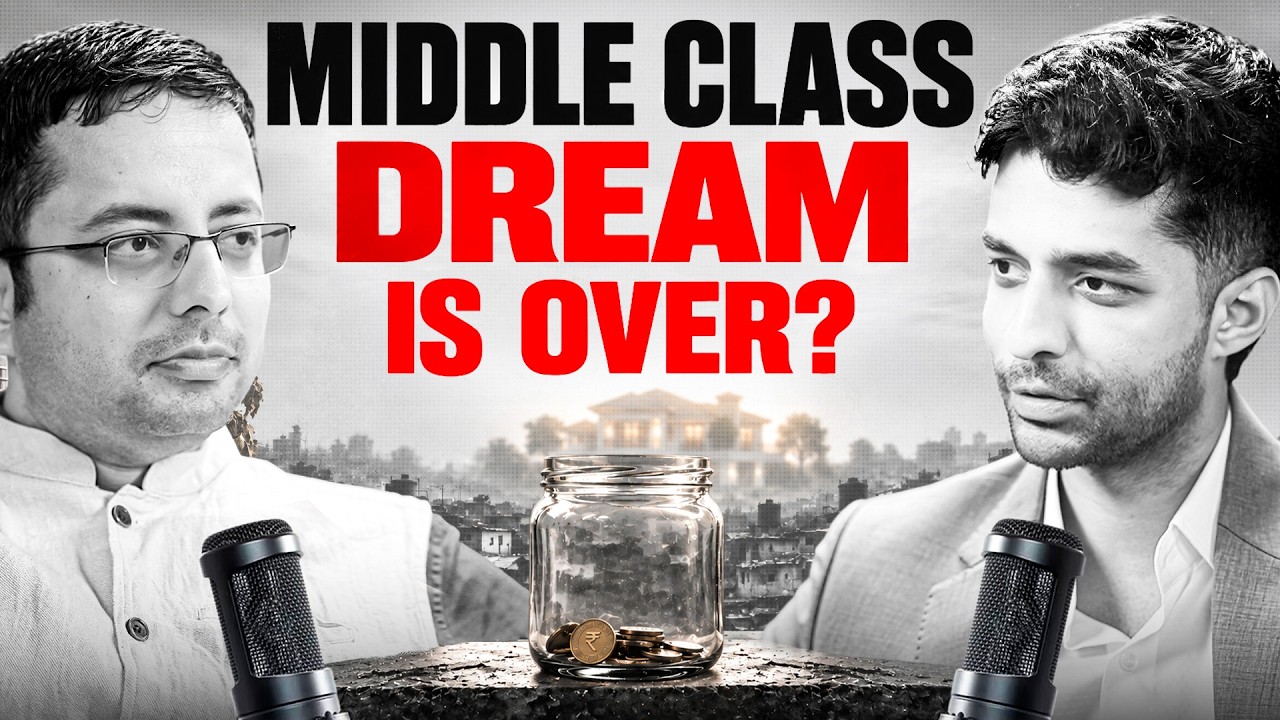
Former IMF Economist on India’s Middle-Class Trap: Jobs, Taxes, AI & the Next 15 Years | FWS

Views
108K
0.3× the show's usual
Length
36m
usual ~52m
From the show
Description
Download 1% Club App Now! https://app.onepc.io/?c=fws-yt-sriram In this episode of The 1% Club Show, recorded in New York City, Sharan Hegde sits down with economist and bestselling author Sriram Balasubramanian for a long-form conversation on one question: how does India actually go from a developing economy to a genuine superpower? Sriram is a former IMF economist based in Washington, D.C., who has previously worked as an economist with a few international organisations. He is an alumnus of Columbia University and the author of Kautilyanomics: For Modern Times and Dharmanomics: An Indigenous and Sustainable Economic Model, both published by Bloomsbury India. His work sits at the intersection of global macroeconomics, economic history and emerging market development, and he has written for Foreign Policy, The Wall Street Journal, Bloomberg and VoxEU as an independent columnist. The conversation begins in the past and works forward. Sriram explains how ancient Indian temples functioned as financial institutions, lending to maritime trading guilds known as Sreni, and why the Roman current account deficit in the early Common Era was driven largely by imports from India. He unpacks the Chola expansion into Southeast Asia, the strategic importance of the Straits of Malacca, and why Kautilya's Arthashastra amounts to a coherent economic framework he calls dharmic capitalism. Sharan pushes back throughout, asking why a civilisation this wealthy and this large was colonised at all, and whether India's historical underinvestment in military technology explains the last four centuries. From there the discussion moves to the present. Sriram lays out what he sees as the five foundations of superpower status: global trade engagement, governance stability, demographic dynamism, long-term strategic foresight, and human capital. He addresses the India versus China comparison directly, including the per capita income gap, and argues against the idea that an authoritarian model is the shortcut India needs. Sharan raises the question many high-earning Indian taxpayers ask privately, about paying significant tax without seeing proportionate returns, and Sriram responds with a view on why accountability tends to rise as more of a population moves into the middle class. This is a useful episode for anyone trying to understand the Indian economy, GDP per capita growth, geopolitics, economic history, and what the next fifteen to twenty years of opportunity in India could realistically look like, including for a generation entering the job market during an AI transition. Guest: Sriram Balasubramanian Twitter/X: https://x.com/SriramB1000 Website: https://www.srirambala.in Book link: https://www.amazon.in/Dharmanomics-Indigenous-Sustainable-Economic-Model/dp/9356409692?s=bazaar https://www.amazon.in/Kautilyanomics-Sriram-Balasubramanian/dp/9354350364/ref=srd_d_vsims_d_sccl_1_1/520-7753624-5949814?pd_rd_w=UdvjN&content-id=amzn1.sym.7ccbe032-5929-4c88-ab39-4923842061df&pf_rd_p=7ccbe032-5929-4c88-ab39-4923842061df&pf_rd_r=0G7AZNNMFAF2Q2VMB388&pd_rd_wg=IVvjR&pd_rd_r=6d230c88-73ff-46a3-9e1b-33e676366862&pd_rd_i=9354350364&psc=1 Subscribe: The 1% Club Instagram: https://www.instagram.com/onepercentclub LinkedIn: https://www.linkedin.com/company/the-1-clubfws Sharan Hegde Instagram: https://www.instagram.com/financewithsharan LinkedIn: https://www.linkedin.com/in/sharanhegde95 Twitter/X: https://x.com/financewsharan — Sharan Hegde is a personal finance creator & founder of the 1% Club, simplifying money, markets, and mindset for India's next generation of wealth builders. — Timeline 00:00 - Highlights 01:05 - Introduction 02:02 - How Countries Move From Low Income To Superpower 03:03 - Why India Fell Behind After Centuries Of Dominance 03:20 - Kautilya's Arthashastra And Dharmic Capitalism 04:43 - Indian Spices And The Indian Ocean Trade Routes 05:00 - Rome's Trade Deficit With Ancient India 05:17 - Why Ancient Temples Worked As Banks 06:18 - The Cholas, Sreni Guilds And Maritime Trade 08:19 - How A Wealthy India Got Colonised 08:57 - Why Didn't India Buy Better Weapons? 09:58 - India Was Never One Country 10:16 - How Open Was Ancient Indian Civilisation? 11:55 - Tanjore And Kailasa: Engineering Ahead Of Its Time 12:30 - Science Versus Warfare Technology 13:19 - Kautilya On Deterrence And Defence 16:00 - Why Russia's Military Power Didn't Make It Rich 18:36 - Human Capital In An AI Driven World 20:04 - The Indian Middle Class In 2026 20:45 - Aspiration Versus Opportunity In India 23:20 - Is An Average Chinese Life Better Than An Indian's? 24:15 - India Versus China On Per Capita Income 25:34 - Why Democracy Is India's Long Term Asset 26:39 - Is GDP Per Capita All That Matters? 29:04 - Advice For Frustrated Indian Taxpayers 31:50 - Startups, Domestic VC Capital And Digital India 32:46 - Why Gen Z Faces A Harder Job Market 34:28 - Closing Thoughts
Covered · Topics
What was discussed
Related
Talks about similar things

India’s Rise to Top 3: How It Will Affect YOUR Wealth? World Bank Economist | FWS 82
Finance With SharanDec 10, 2025
86% similar
193K views
The Truth About Debt: Why 99% Rich Use It & Others Fear It | ft. Dr. Anil Lamba | FWS 79
Finance With SharanNov 20, 2025
86% similar
863K views
CEO Blueprint : Anupam Mittal's Masterclass on How to Find Gap in the Market?
Think SchoolAug 21, 2025
84% similar
744K views
Global Chaos, Falling Rupee & India’s Economy | Economic Survey 2026| India’s Chief Economic Advisor
Think SchoolJan 30, 2026
84% similar
444K views
How China Fakes Its Success with Frank Dikotter
TriggernometrySep 5, 2026
83% similar
1.5M views
Why Israel Attacks Syria, Fears Iran’s Bomb & Faces Global Pressure : Israeli Ambassador Explains
Think SchoolAug 6, 2025
84% similar
119K views