Loading
Episodes · 12 months
16
Oct 2025–Sep 2026peak share, Oct 2025
Share of analysed episodes per month, Oct 2025 to Sep 2026: 4 of 3,515, 1 of 3,382, 2 of 3,624, 3 of 3,900, 3 of 4,019, 1 of 4,487, 0 of 4,163, 2 of 3,983, 0 of 4,048, 0 of 4,252, 0 of 4,175, 0 of 4,345.
All time
25
+2 via 4 narrower
On record
10
took a position
Where they standLast discussed
5mo ago
May 14, 2026
Where they stand
Camps of opinion · 2Positions people took on this topic in transcripts, grouped by school of thought. Within a camp, people with demonstrated expertise on the topic come first, then those who reached the most listeners on it. Positions are extracted from transcripts by a model and may misattribute who said what. Every quote links to the episode it came from.
Psychology drives financial outcomes
Financial behaviors and market results are primarily influenced by human psychology, biases, and innate decision-making tendencies.
4 people · 4 episodes

Finance is uniquely dependent on personal behavior rather than formal education or technical skill.
“All that matters in finance is it's not about what you know. It's not about how smart you are. It's not about how much information you have. It's just about how you behave. And there's almost no other field where that's the case.”
My First Million · Jan 2026 · 4 episodes · 12.0M views on this topicAR
Inertia is the most significant factor in behavioral finance, making default settings in financial products extremely powerful.
“I like to joke that inertia, you know, nothing is the most powerful force in behavioral finance, right? That's what inertia is. It's nothing. It's doing nothing.”
Morningstar, Inc. · Jan 2026 · 1 episode · 4K views on this topic
People are predictably irrational, which corporations and marketers exploit to influence purchasing decisions.
“As was said by Dan Arieli uh who is a uh um behavioral economist. And because of that, corporations, marketers, um basically everybody who wants to sell you something knows about these things and they can manipulate those things.”
Stuff You Should Know · Feb 2026 · 1 episode · 11K views on this topic
Markets often price long-term compounders using a method closer to hyperbolic discounting, which values future cash flows more highly than exponential discounting.
“It's likely that the market, whether consciously or not, prices these businesses using a discounting approach that more closely resembles hyperbolic rather than exponential discounting.”
We Study Billionaires · Nov 2025 · 1 episode · 8K views on this topicBiases have situational limits
While psychological biases and default settings exist, their practical impact is often constrained by social context and misapplication.
2 people · 2 episodes
JK
Default options like opt-out systems do not consistently increase organ donation rates because the ultimate decision often relies on next-of-kin consent.
“what the research shows is that there just isn't a delta between the countries that use opt in and the countries that use opt out, because it always goes to that affirmative decision.”
Masters in Business · Mar 2026 · 2 episodes · 3K views on this topicRS
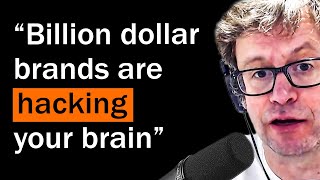
Richard Shotton maintains that many behavioral biases are generally true and useful rules of thumb that people over-apply in irrelevant situations.
“But, then the danger is they over-apply it in situations where it's not relevant. Like in the situation Zhang set up, people got the same facts about cardiovascular health, but because they threw in this second benefit, it seemed to detract from it. So, I think it's often the misapplication of a gen”
Chris Williamson · Jan 2026 · 2 episodes · 65K views on this topicExtracted by a model; may misattribute who said what.
In the transcripts
Episodes discussing this topicIncludes episodes tagged with a narrower subject. Each is marked with the subject it came in through.






Over time
Share of episodesThis topic's episodes as a share of every episode we analysed, in each complete month. We analyse more episodes every month, so a raw count would mostly show that growth. Recent months fill in as transcripts are analysed.
Complete months · first on record Nov 2021