Loading

Episode
Mobility, Weight Training & Powerlifting & muscle activation technique
Views
1K
0.0× the show’s average
Episode1K
Show avg91K
Published
11y ago
Jul 11, 2015
Length
43m
show avg 56m
From the show
Description
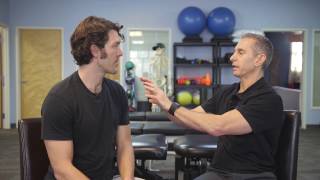
Science says eating just one meal per day can improve your health. Learn more at https://highintensityhealth.com/OMAD ----- 2:58 Muscle Activation Technique: It is different from physical therapy, myofascial release, and trigger point therapy. The assessment is a specific and systematic range of motion examination to see how the body is moving and how the different systems are interrelated. This reveals whether the problem is at the site of the issue or if it is originating at another point in the body, which would need to be addressed first. Muscle tightness is a symptom of muscle weakness or the inability to generate optimal tension on the other side of the joint. Rather than just trying to relax the tightness in the muscle, the capability of the muscle is addressed. The body responds by allowing more range of motion. 5:13 Low Back Pain/Tight Hamstrings: If your hamstring feels tight, it is most likely the muscles on the other side of the joint which are weak. If you cannot flex your hip, it may not be that your hamstring or lower back is tight. It is potentially the hip flexor muscles and/or abdominal muscles which might be weak. They can test for contract-up capability in nearly any muscle that crosses any joint in the body. 7:00 Full Body Exercises: Integrated exercises, like squats and deadlifts that require the body to rapidly generate tension across multiple muscle groups, are awesome. However, when one point of the body is weak, the rest of the body must compensate, and they are not designed for that purpose. In order to get the benefit from integrated movement, all of the components need to work well. Muscle activation technique ensures that all of the components operate properly. 8:36 Addressing Muscle Weakness: Weak muscles are strengthened through isolated isometric exercise or isolated joint movements; possibly with machine based work. 9:06 Potential for Injury: Unless weak muscles are addressed, general exercise activity makes the strong muscles and tissues stronger and the weak muscles and tissues weaker. This impacts motion and leads to chronic pain or potential injury. 10:20 Integrated System Thinking: It is all about root cause analysis. Brandon’s clients see him for chronic problems, which are most often not the area where they are having the most dysfunction. Brandon has seen clients with back, shoulder or neck pain and have the source be from the foot or lower leg. Sometimes lower leg conditions, like chronic planters fasciitis, is from a weakness in the hip or trunk. 11:54 The Warm up: The best way to prepare the body for exercise or muscle stress is to generate tension in the muscles using low grade isometric exercises. These would be components of the full movements planned in the day’s exercise routine. It shortens the muscles you will be using in a very gentle fashion. 13:01 The Misunderstood Muscle: The muscle generates tension to move and stabilize joints. The best way to prepare the muscle to generate tension to move the joints is to generate tension and move the joints in an isolated and gentle way. 16:13 Increasing Joint Mobility: You don’t want joint mobility without joint stability. Mobility without stability equals vulnerability. Muscles need to be able to generate optimal tension and control in all of the joint end range positions you require of it. For people recovering from injuries, in chronic states of inflammation, or with chronic pain, increased mobility has a greater risk than reward.
Related
Talks about similar things
Dry Needling & Graston Technique For Joint Pain w/ Dr. Geoff Lecovin
6K viewsHigh Intensity Health·Apr 21, 2017

Old School Exercise Tips That Build Muscle & Burn FAt
26K viewsHigh Intensity Health·Aug 28, 2019

Charles Clay: How To Uncover The Greatest You
78 viewsWellness + Wisdom Podcast·Mar 26, 2019

Nic Bartolotta: The Truth Behind Stretching
285 viewsWellness + Wisdom Podcast·Mar 16, 2018

How to Complete Overhaul Your Health in 2025 | Aaron Alexander
5K viewsBigDeal by Codie Sanchez ·Jan 8, 2025

The Fascinating Science of Posture (& Its Full-Body Health Effects!) With Annette Verpillot
930 viewsBen Greenfield Life·Apr 2, 2026