Loading
Episode
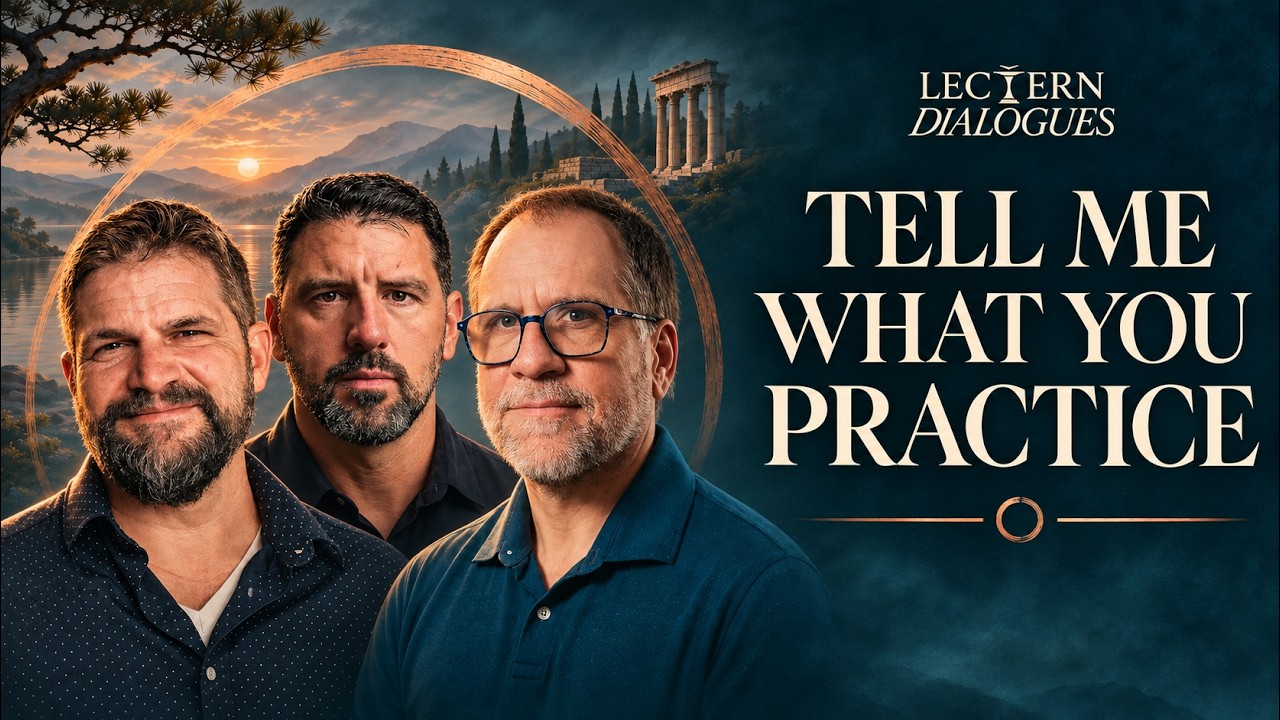
4E Cognition Meets Ecological Dynamics (with Rafe Kelley & Rob Gray)
YouTube views
10K
1.1× the show’s average
Episode10K
Show avg9K
Published
2w ago
Nov 13, 2026
Length
1h 10m
show avg 1h 18m
From the show
Chapters
Why have two research traditions built on J.J. Gibson, 4E cognitive science and ecological dynamics, barely spoken to each other, and what happens to skill, emotion, and meaning when they finally do? In this Lectern conversation, Rafe Kelley leads a long-awaited dialogue between John Vervaeke and Rob Gray, who studies how people learn and adapt skills in baseball, other sports, and police training. Rafe frames the puzzle: both men are deeply rooted in Gibson, yet 4E cognitive science and ecological dynamics in motor learning have stayed largely siloed. Rob explains how the 4P model of knowing reached him through police-training colleague Pete Blair, and why it helps explain where cognition fits in an ecological approach, especially when officers must later explain their decisions. John argues that relevance realization comes before representation, that participatory and perspectival knowing are not representational, and proposes a fifth E, exaptation, in which sensorimotor processes are repurposed to move through abstract and affective space. The conversation then turns from how skills are learned to why practice matters for a meaningful life. Rafe recalls John's challenge, “Where are the practices?”, and argues that physical practice like parkour grounds an embodied way of knowing whether we are getting better. John asks whether skill training can cultivate virtue, and Rob points to identity and to police work built around community-connected officers. Rafe proposes a sixth E, emotion, drawing on play research; Rob describes hot versus cold practice and helping athletes reframe pressure as challenge instead of suppressing it. In the final stretch, Rafe brings in Nikolai Bernstein and the degrees of freedom problem, and John explains why he does not think robots are embodied the way living organisms are. Rafe Kelley is a movement teacher and parkour practitioner whose work focuses on embodied practice, play, and how physical practice contributes to meaning in life. He runs the Return to the Source intensive, and in this episode he leads the conversation as the bridge between the two traditions. Rob Gray is a professor at Arizona State University who studies how people learn, acquire, and adapt skills. He applies an ecological dynamics, embodied approach to skill development in baseball, other sports, and police training. John Vervaeke is a cognitive scientist and philosopher whose work explores cognition, meaning, wisdom, and the meaning crisis. In this conversation, he brings relevance realization, the 4P model of knowing, and his proposed fifth E, exaptation, to bear on skill, emotion, and embodiment. John Vervaeke’s Web - https://johnvervaeke.com/ Emerging Cognition - Rob Gray: https://www.amazon.com/s?k=Rob+Gray+Emerging+Cognition Dynamics in Action - Alicia Juarrero: https://www.amazon.com/s?k=Alicia+Juarrero+Dynamics+in+Action Descartes’ Error - Antonio Damasio: https://www.amazon.com/s?k=Antonio+Damasio+Descartes+Error The Rediscovery of the Mind - John Searle: https://www.amazon.com/s?k=John+Searle+The+Rediscovery+of+the+Mind Explore courses and teachings from The Lectern https://lectern.johnvervaeke.com/ Support the Lectern and join a growing community of wisdom seekers https://www.patreon.com/johnvervaeke Ideas, People, and Works Mentioned in this Episode J.J. Gibson Nikolai Bernstein Alicia Juarrero Evan Thompson Julian Kiverstein Anthony Chemero John Searle Hubert Dreyfus Barbara Tversky Antonio Damasio Barbara Fredrickson Jaak Panksepp Pete Blair Follow John Vervaeke: Website - https://johnvervaeke.com/ Twitter - https://x.com/DrJohnVervaeke YouTube - https://www.youtube.com/@johnvervaeke/videos Patreon - https://www.patreon.com/johnvervaeke Thank you for watching!
- 0:00Cold open: “Where are the practices?”
- 0:55Welcome: Rafe takes the lead
- 1:30Two traditions rooted in J.J. Gibson
- 3:40Rob Gray on skill and police training
- 7:05Why are 4E and ecological dynamics siloed?
- 11:40The perspectival P and identity
- 13:05Is 4E representational?
- 15:50Relevance realization before representation
- 22:30A fifth E: exaptation
- 25:40Insight in finger and eye movements
- 27:20What is natural language?
- 31:55Meaning and Return to the Source
Mentioned
Names dropped

Related
More with these guests

Embodiment and the Metacrisis with Rafe Kelley
7K viewsJohn Vervaeke’s Lectern·Feb 23, 2024·With Rafe Kelley
RK

Navigating the Terrain of Movement and Meaning: A Conversation with John Vervaeke and Rafe Kelley
5K viewsJohn Vervaeke’s Lectern·Sep 22, 2023·With Rafe Kelley
RK
Parkour and Rough Play | Rafe Kelley | EP 343
543K viewsJordan B Peterson·Mar 27, 2023·With Rafe Kelley
RK
Related
Talks about similar things

No Bad Parts? Dick Schwartz and John Vervaeke on IFS, the Self, and Spiritual Guides
18K viewsJohn Vervaeke’s Lectern·Oct 24, 2026
Silk Road Seminar with John J. Thatamanil
10K viewsJohn Vervaeke’s Lectern·Sep 26, 2026

Where Does Genius Come From? | Michael Levin
61K viewsThe Psychology Podcast·Oct 28, 2026
What Is It Like to Be an AI? | Cameron Berg
41K viewsThe Psychology Podcast·Oct 28, 2026

The Agent in the Arena, John Vervaeke & Jonathan Rowson
19K viewsRebel Wisdom·Apr 8, 2022

What a Squirrel Does That LLMs Don't (Michael Tomasello)
15K viewsMachine Learning Street Talk·Nov 19, 2026